Success story
Three Sisters Sowing the Future in Rabinal
Under the strong morning sun in Rabinal, three sisters laugh. Their hands and arms are covered with neem leaves, but their eyes shine: Pedrina, María Judith, and Angelina Cojom Tun have learned to care for the land in a different way. Raised among maize and beans, these three sisters, known for their joyful spirit, continue to cultivate the land today, integrating new practices learned through Qachuu Aloom’s bio-input workshops.
Agroecological workshops to restore soils and support communities
In recent years, the indiscriminate use of agrochemicals has disrupted ecosystems and undermined the fertility of soil microbiological life. In response, Qachuu Aloom is implementing a series of workshops on organic farming and the production of natural bio-inputs for women farmers from 22 communities. These workshops are funded by the Centre for International Studies and Cooperation (CECI), as part of CECI’s Volunteer Cooperation Program, with support from Thematic Funds. Innovative initiatives in the agricultural sector have been supported to promote women’s economic empowerment and strengthen resilience to climate change.
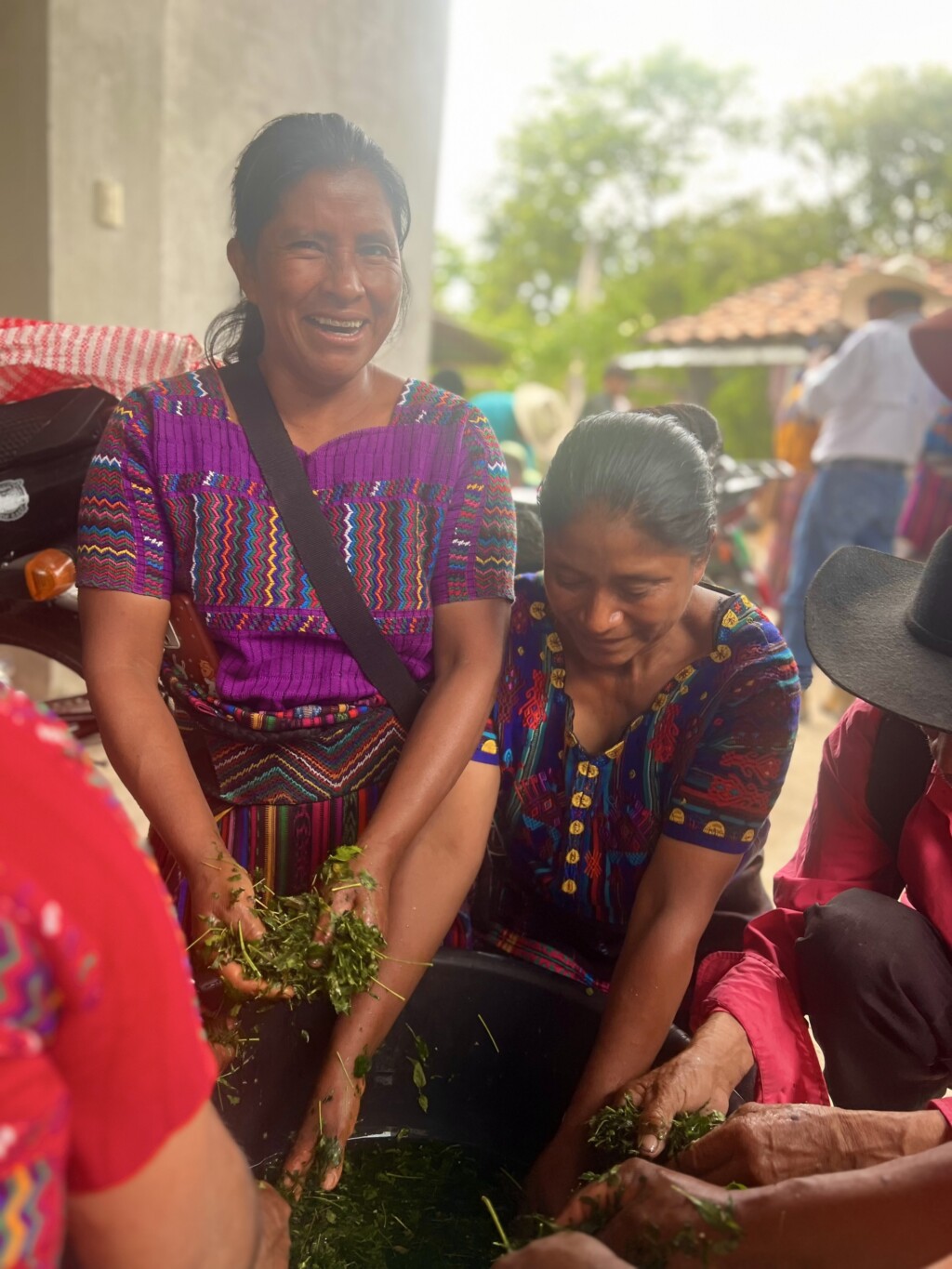
The workshops recognize and value ancestral knowledge. They create spaces for reciprocal knowledge exchange, combining technical expertise with the community-based experience of families. Women share what they have learned in their milpas while also incorporating new agroecological practices that build on their existing knowledge. New methods for producing bio-inputs, organic fertilizers, and natural insecticides have been introduced as more sustainable and environmentally friendly alternatives to chemical products, in alignment with the preservation of the ancestral Milpa farming system.
One month ago, the sisters participated in Qachuu Aloom’s first bio-input workshop, motivated by a desire to learn and to strengthen their economic autonomy. There, they learned how to prepare their own organic fertilizer and the Bio-Cafrex insecticide.
“Since we started using our fertilizer, the maize is greener and stronger,” smiles Pedrina, the most cheerful of the three. The Bio-Cafrex has even been used with their chickens. “Our birds are healthier and get sick less often,” says Angelina.
In Guatemalan communities like Rabinal, the milpa is at the heart of food security. When the milpa is healthy, families eat better and can sell surplus crops. Working the milpa is not easy: it requires early mornings, strength, and patience.
“When we make our own fertilizer and fungicide, we spend less money. What we invest is our time. That is worth it because our crops are bigger and greener,” says María Judith.
Thanks to natural products, their milpa is now more diverse and fertile: maize, beans, squash, and vegetables fill both the table and the basket. With more food for their families and the opportunity to sell surplus produce, the sisters are moving toward greater autonomy.
A natural insecticide
During the second workshop, the sisters enthusiastically learned how to prepare an insecticide using neem tree leaves. Together with the other women, they selected the best leaves, cut them, and mixed them carefully. Neem is used as a natural insecticide to control agricultural pests such as whiteflies and caterpillars, without harming beneficial insects.
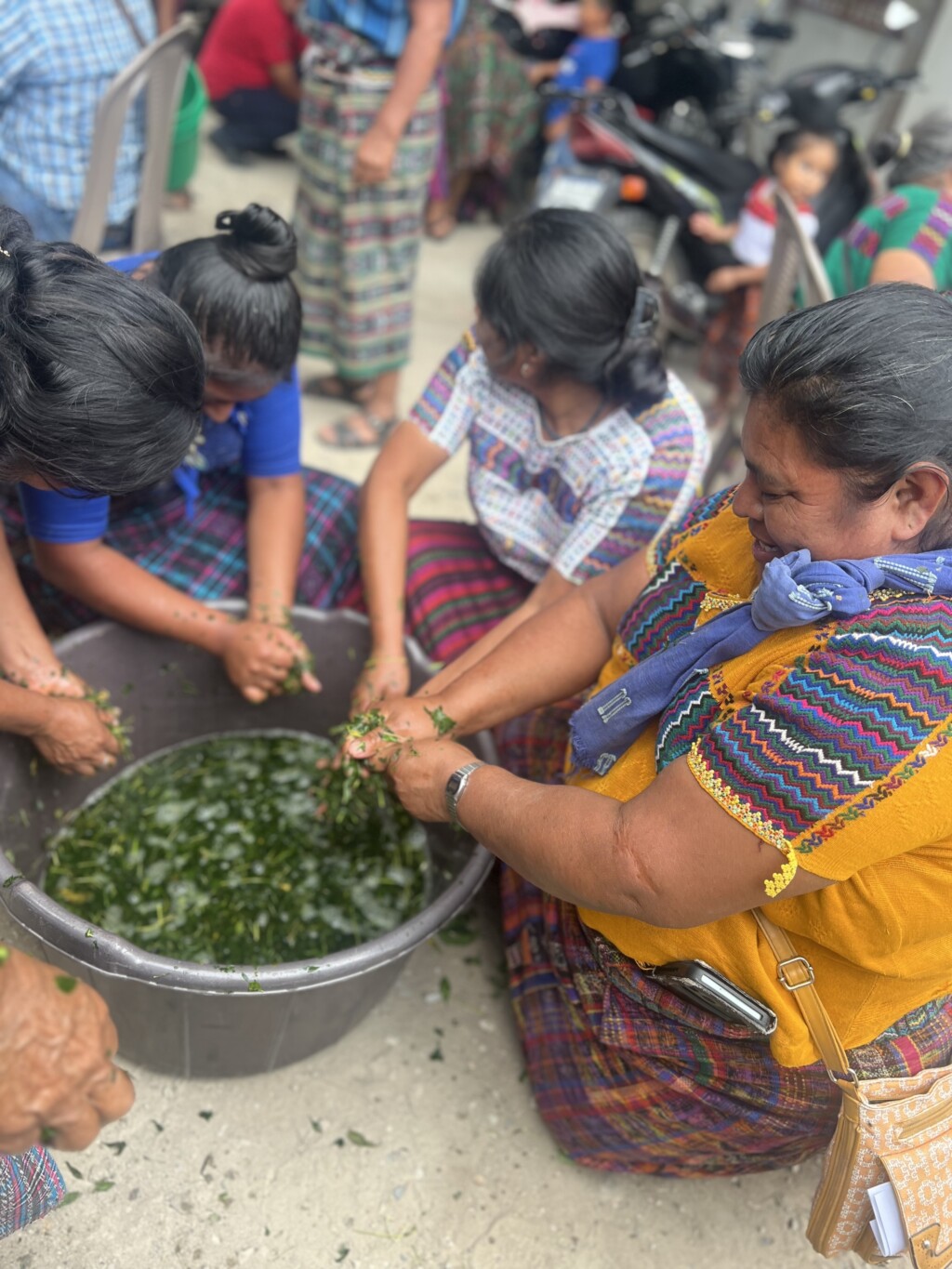
The Cojom sisters are not only sowing maize and beans; they are also sowing knowledge in their children.
“Our young children are learning these practices too. They are beginning to understand that there are better ways to do things,” says Angelina.
“Learning is worth it,” the three sisters conclude. The girls and boys who participate in the milpa today will grow up with a more conscious relationship with the land, better prepared to face tomorrow’s challenges without abandoning their roots.
The practices implemented by the Cojom sisters demonstrate that it is possible to move toward sustainable development from the milpa, caring for the land without breaking ties with tradition. By reducing the use of agrochemicals and embracing natural bio-inputs, families protect soil fertility, biodiversity, and human health, while also lowering production costs. This balance between production, environmental stewardship, and family well-being is the foundation of a more just and lasting agriculture.
Our partners
We would like to thank our financial and implementing partners, without whom this project would not be possible. CECI’s Volunteer Cooperation Program is made possible through funding from the Government of Canada provided through Global Affairs Canada.