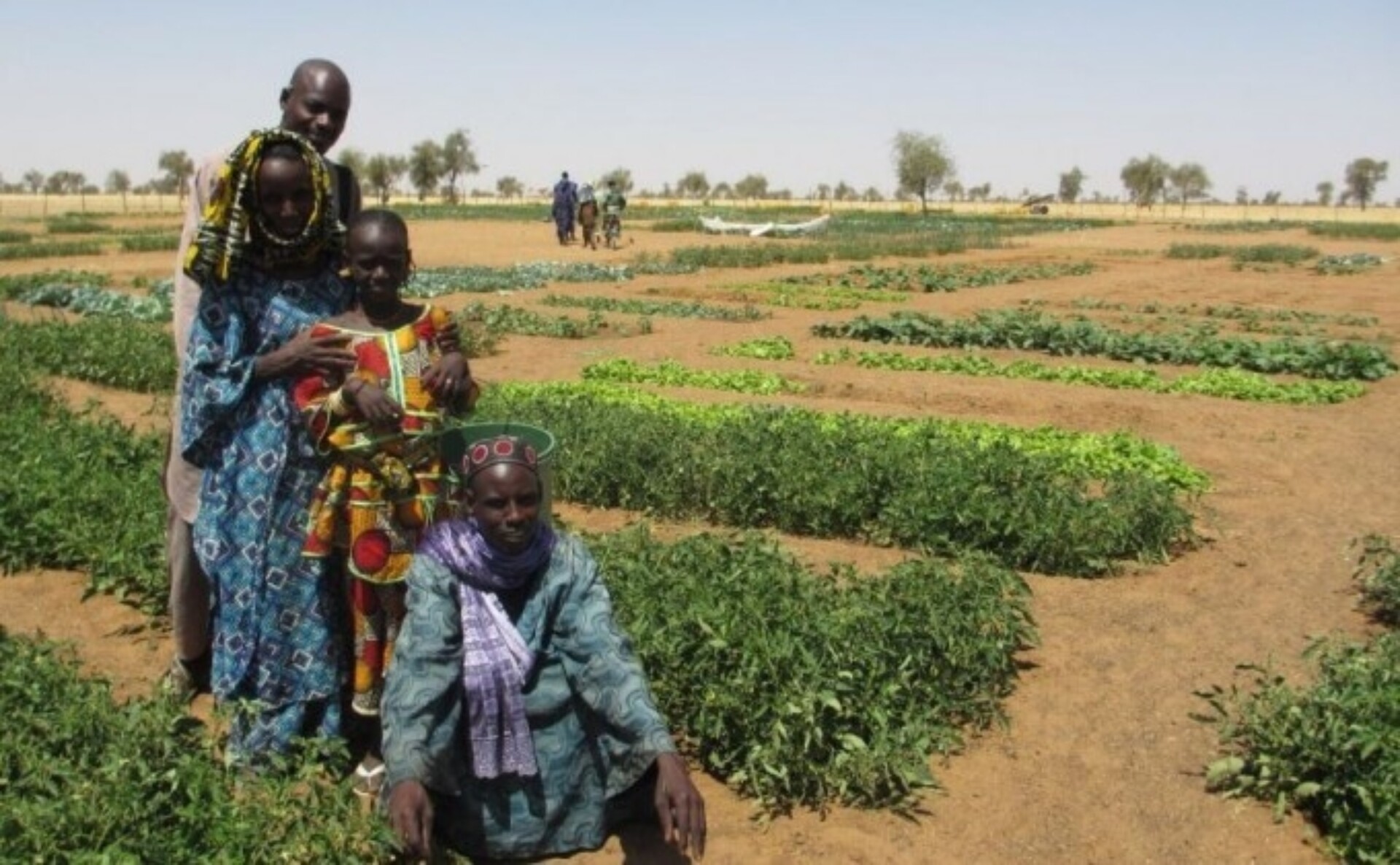
Completed project
Strengthening Food Security and Resilience
Juin 2015 - September 2016
$ 1,090,000 CAD
(USAID / OFDA – Office of US Foreign Disaster Assistance)
FAFD (Fédération des associations du Fouta pour le Développement)
77,016 beneficiaries
For many years, Senegal has faced recurring food crises caused by a range of factors: drought, floods, climate change affecting farming cycles, declining cereal production, shrinking pasture for livestock, rising prices of staple foods, etc. The situation is all the more critical in the north of the country during the rainy season, also known as the hunger gap.
Launched in 2012, the project, which supports strengthening food security and resilience, aims to reduce the vulnerability of people in three departments in the area. It is the 4th and final stage of this project.
Improving Farming Practices for Greater Access to Food
From its inception, the project aims to give targeted communities better access to food, specifically during the hunger gap. During this period, when there is usually no harvest, the population, relying on a dwindling grain reserve, finds itself in a critical situation. In order to decrease the vulnerability of these communities, different types of actions have been undertaken: securing produce and grain production through the supply of farming inputs; rehabilitating or digging wells (thus reducing the strain on women who have to walk from 30 minutes to an hour each day to get water for the home and the vegetable garden); offering training (improving crop techniques, efficient use of water); or money transfers to attend to the households’ immediate needs.
Focal Points of Intervention and Results Achieved
The 4th stage targets households affected by the food crisis in villages that were not supported through previous projects. Support for these vulnerable populations came in the form of grain and vegetable seed distributions, community farming tools, and livestock feed for households with small herds (5,988 animals identified as very weakened received feed rations).
The distribution of seeds and farming inputs has impacted 77,016 beneficiaries (40,048 men and 36,968 women). Over 6400 vulnerable households were supported (including 508 led by a woman) and have increased their cereal reserves by four months.
Farmers gained CAD 50,000 in profits from their crops and were also able to build up reserves.
13,500 women took part in the market vegetable production activities (distribution and training, maintenance and pest management). They made over CAD 13,000 in profits by selling vegetables while also feeding their own families. Furthermore, they planted 9,498 fruit trees in the vegetable gardens to help protect them from wind and extreme temperatures.
Resilience
The project’s other component is to increase the resilience of targeted communities. Training sessions were planned in order to help them become less vulnerable. These covered many aspects, including ensuring household food security in a context of chronic drought, adopting alternative crop systems, storing seeds naturally, fighting parasites, and improving market access. The project also sought to build awareness on the need for community granaries for food security. A module was delivered across 25 training sites, with 20 people participating in each.
To extend the reach of the information and cover the whole area, these subject matters were presented and explained during three radio programs broadcast by four different stations.
Meetings were also organized with the supporting communities during the previous stages in order to strengthen their positive adaptation strategies. At the end of the project, it appears that the targeted communities have developed better strategies for resilience through the production of cereals and stocking methods, have improved their health through better nutrition, now live in a more serene environment with the reduction of food-related and economic stress, and have developed a better relationship with local authorities and government agencies. Furthermore, the women of these communities benefited from the strengthening of organizational capacities, which favours their empowerment.
Results that count
Significant increases!
26,126 (12,807 men and 13,329 women)
farmers supported
2200 people (1152 men and 828 women)
trained in plant diseases and parasite control
220
women’s organizations created throughout the project
5988
animals saved