Completed project
Strengthen the resilience and protection of migrant or displaced women and girls in Colombia
June 2020 to March 2021
$25,000 CAD
(cash contribution from CECI)
Mencoldes Foundation
(Colombian Mennonite Foundation for Development)
131 people benefit directly from the project
1 000 people benefit indirectly
Since 2014, Venezuela has been facing an unprecedented economic, social and political crisis. The global drop in oil prices, on which the Venezuelan economy was largely dependent, combined with government mismanagement, has pushed the country into the biggest recession in Western history. Shortages of food and medicine, lack of medical and social services, political repression and the resulting tensions and violence, in addition to the COVID-19 pandemic, have made the living conditions of the Venezuelan population unsustainable. Five million people have been forced into exile since the beginning of the crisis, almost 40% of whom have found refuge in neighbouring Colombia in hope of a better life.
But Colombia’s stability is currently affected by the difficulties in implementing the peace agreement between the state and the FARC, in addition to the COVID-19 pandemic, etc. The Colombian state is struggling to meet the health, education and security needs of its population, and nearly 8 million Colombians have moved from the countryside to the urban fringes in an attempt to gain access to better services. Because of their limited resources, Venezuelan migrants and displaced Colombians find themselves in the same marginalized neighbourhoods, such as Soacha and the south of Bogotá. While both groups face many common economic and social challenges, the opportunities for Venezuelans are further limited by their status, which limits them to informal employment and even to worker exploitation. In addition, Venezuelan migrants are often discriminated against because they are perceived as a threat to the national economy.
More particularly, Venezuelan women and girls face terrible conditions when migrating; and similar living conditions once they are resettled. They are systematically exposed to abuse and sexual violence, and are further pushed into forced labour, especially drug trafficking and prostitution.
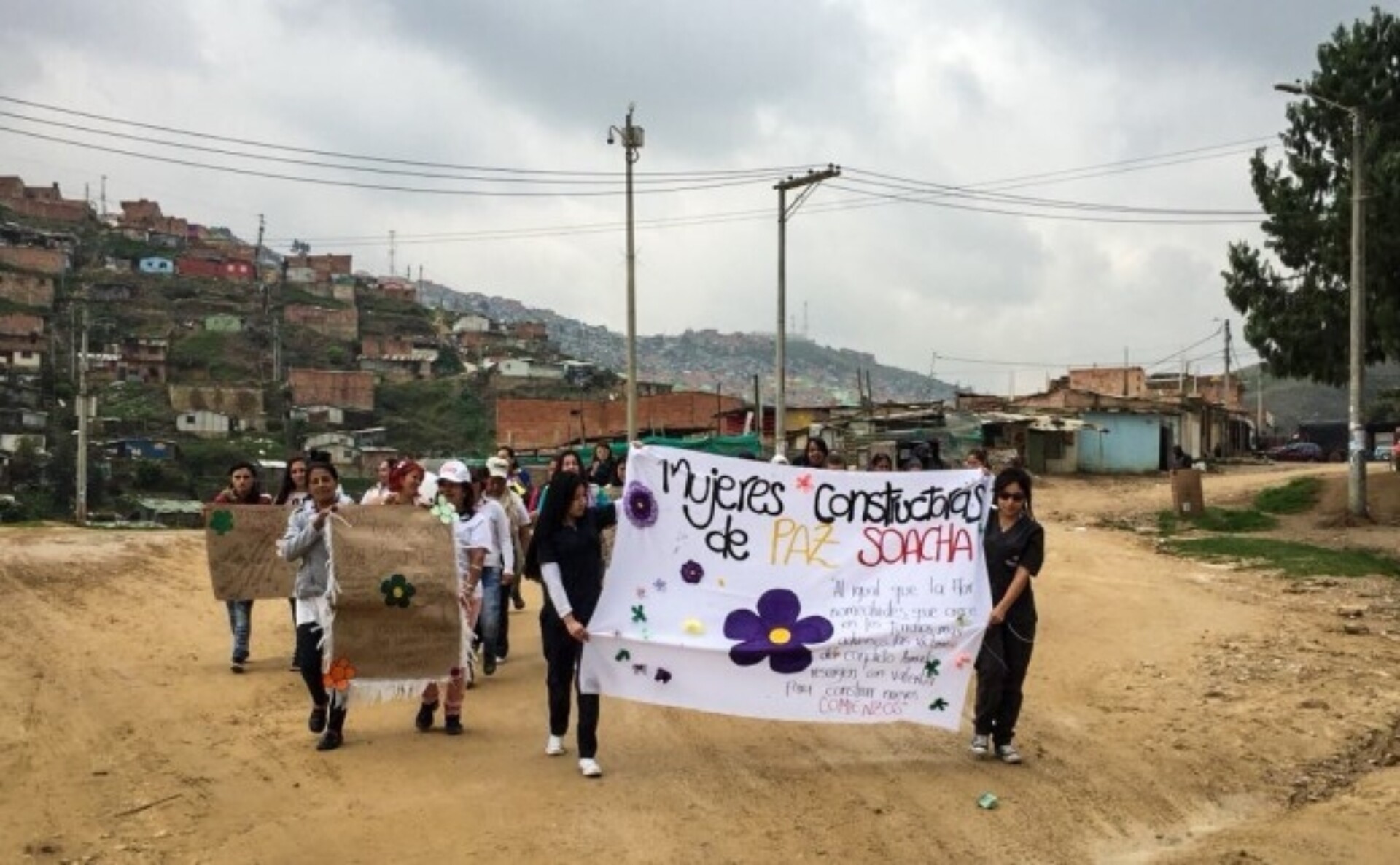
In this context, the project promoted the recovery and social integration of young Venezuelan migrant women and young displaced Colombian women. It also aimed to reduce the risks of sexual violence and exploitation during migration.
Economic Empowerment of Women
To reduce the economic and social vulnerability of women in the Bogotá-Soacha region, the project provided seed capital to support the development of small businesses run by young Venezuelan migrant women. The project also provided technical support to strengthen their business plans and improve profitability. In addition, the project provided marketing and networking opportunities to help them increase the reach of their businesses.
Thanks to this capital and support, young women entrepreneurs were eventually able to generate their own income through an economic activity that does not jeopardize their health, safety or physical and psychological integrity. The project also benefited the communities where these young women live, since the selection of business projects considered the positive impact they would have on other women and girls, and the support offered strengthened the young women entrepreneurs’ ability to become agents of change.
Creating a living environment free of violence and discrimination
To prevent and combat sexual exploitation and gender-based violence, women entrepreneurs who have benefited from seed money, as well as members of their families and communities, participated in information and awareness-raising sessions on gender-based violence, sexual exploitation and human trafficking in the context of international and national migration. Particular emphasis was placed on engaging men and boys as key allies in preventing such violence and supporting the care of victims.
In addition, in order to improve peaceful coexistence between refugees, displaced people and host communities, training on conflict prevention, community mediation, peaceful coexistence between groups of different origins and women’s leadership in conflict resolution was offered.
Results that count
Significant increases!
31
young women receive start-up capital to develop a business project
100
women are trained on gender-based violence, sexual exploitation, human trafficking and community conflict prevention and management.
Our partners
Thank you to our financial and implementation partners, without whom this project would not be possible.