Completed project
Renforcement des communautés rurales
May 2010 to July 2012
1 085 000 $ CA:
- $ 478,000 provided by AFD
- $ 294,000 provided by Rio Tinto Alcan
- $ 224,000 provided by PACV
- $ 88,000 provided by CECI
French Development Agency (AFD)
- Village Communities Support Project (PACV)
336,583 people
48% women
The pendulum swings back
Mining companies carry with them an environmental and social legacy that is not easily erased. Recently, however, the emergence of a new awareness within some companies has enabled the payment of fair returns to local communities.
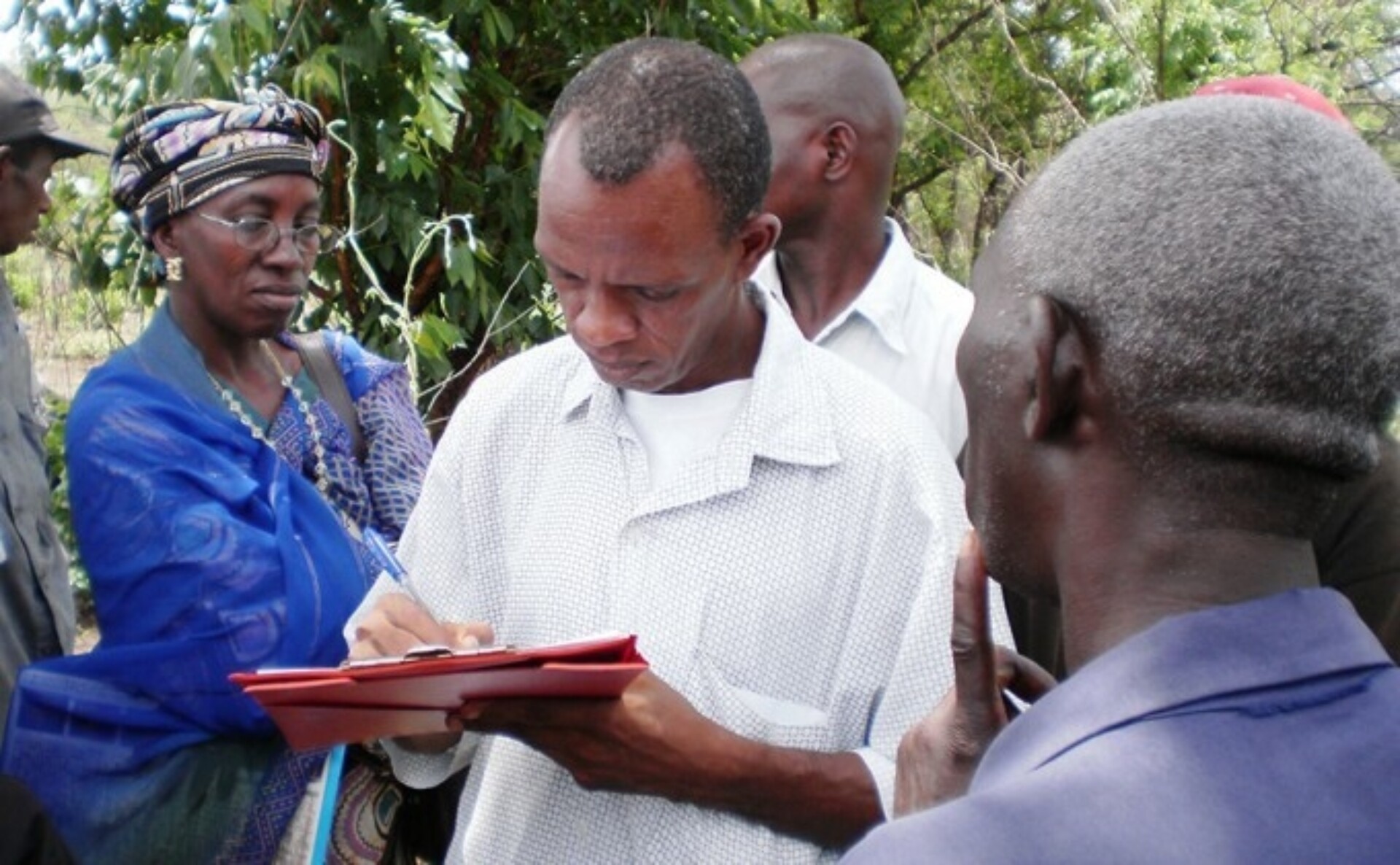
In Guinea the subsoil contains a large share of the world’s bauxite reserves, which is the principal source of aluminum. The Projet de Renforcement des Capacités des Communautés Rurales de Développement (CRD) de Boké (PRCB) is an initiative of Rio Tinto Alcan, conceived to ensure that the villages and communities affected by their activities would not only be positively impacted, but that the citizens themselves would be able to voice their own needs and interests. The primary objective of the PCRB is thus to consolidate local governance in the communities of Boké prefecture in northwestern Guinea.
The first phase of PRCB, from March 2009 to April 2010, allowed civil society organizations, governments and elected officials to connect with one another and to become familiar with the relevant tools for analysis and planning. Over 600 local representatives and stakeholders took part in one or more training sessions. According to the president of the Sangarédi CRD, it was “a genuine application of Guinea’s national decentralization policy.”
Given the success of the PRCB I, CECI is now undertaking the second phase of the project, which is intended to equip local actors with specific skills in project planning, management, and follow-up. In working towards this objective, and in the context of public-private partnership, a constant awareness must be maintained of the principles of sustainable local development and of the social and environmental responsibilities of companies working in the region.
It is equally important that local partners master the key components of a sustainable development project. PRCB II is therefore providing relevant training sessions, such as environmental impact assessment.
If sustainable development programs in Africa are to go forward, the importance of the mining industry cannot be ignored. The Guinean example shows that the wind of change can come from that direction and reminds us that winds can change course at any time.