Completed project
Reconstruction of Disadvantaged Neighbourhoods (PREKAD)
June 2014 to June 2016
$6,582,500 CAD
The World Bank; the Office for the Monetisation of Development Aid Programmes (BMPAD) in Marie, Port-au-Prince; the Directorate of Civil Protection (DPC); and the National Directorate for Drinking Water and Sanitation (DINEPA).
18,000
families
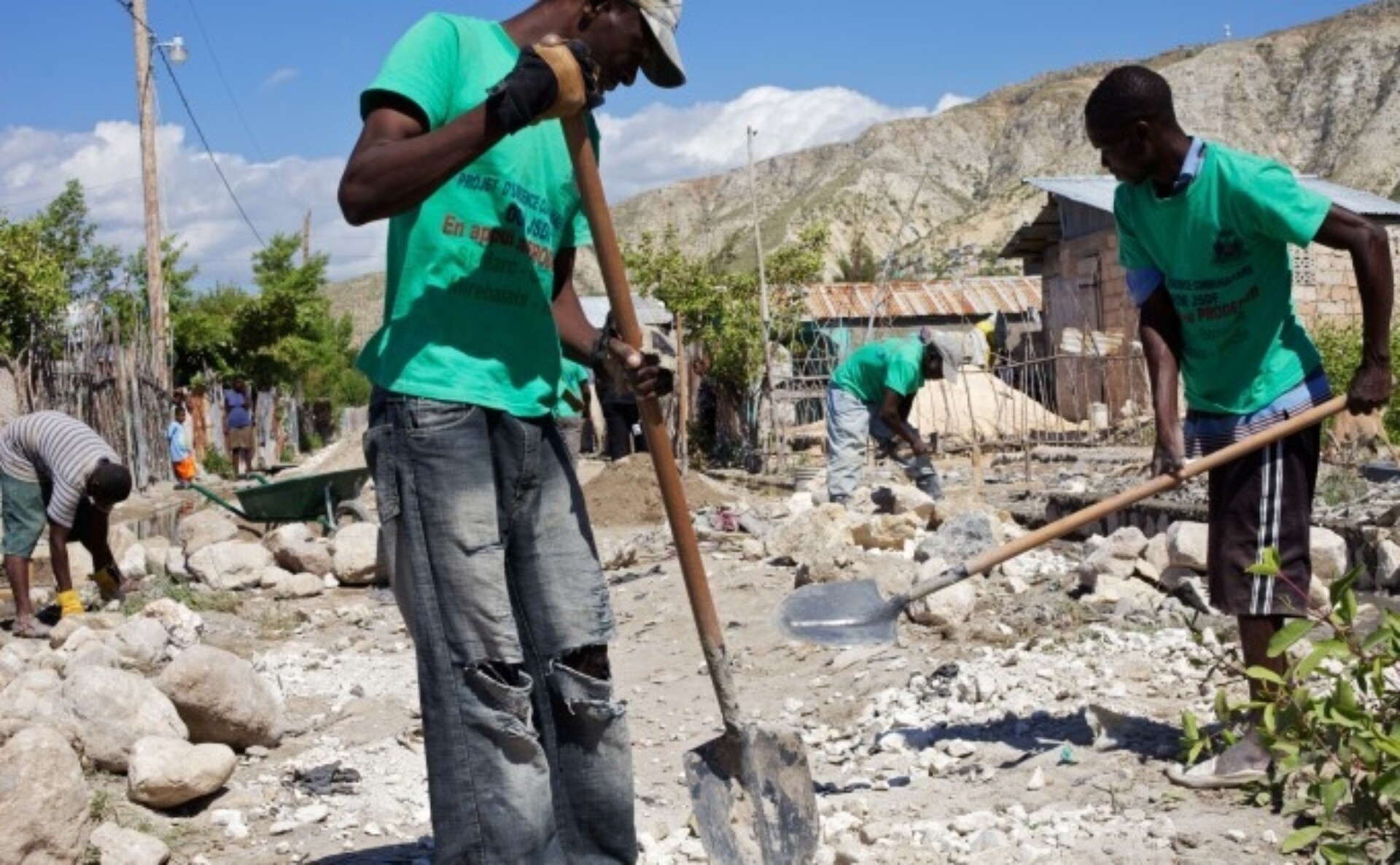
CECI, which has been active in Haiti since 1971, also acted as a first responder in its capacity as an international co-operation organization following the 2010 earthquake. The project to rebuild disadvantaged neighbourhoods in Port-au-Prince (PREKAD) was developed to support the World Bank’s contribution to various reconstruction programmes in different neighbourhoods of Port-au-Prince affected by the earthquake. The project aimed to improve access to basic infrastructure and social services, including the rehabilitation and reconstruction of housing, as well as the upgrading of community facilities needed during emergencies in the informal settlements of Port-au-Prince, including Carrefour-Feuilles, where CECI has been active since 2010.
Six years on, the PREKAD programme has led to several significant achievements, such as the construction of staircases and walkways, concrete roads, drinking water pipes and around sixty junctions marked with signs to facilitate traffic flow and help people find their way around the neighbourhood. More than 1,500 families now have a family emergency plan (FEP) to improve their protection in the event of a disaster. Nearly a hundred young people, including around thirty women, have received training in construction trades such as bricklaying, plumbing and tiling. 60 per cent of them now have a stable job in this sector.
The CECI programme has thus enabled the creation of temporary jobs for 17,650 people, the voluntary resettlement of 55 families (330 people) who had been living in makeshift shelters since the earthquake, and the improvement of living conditions for 3,292 families (approximately 16,460 people), all of whom live in the vicinity of the rehabilitated areas.