Completed project
Protection of the Cap-Haïtien Drainage Basin
April 2010 to June 2012
$2,2 million USD
financed by the Inter-American Development Bank
Municipalities - Decentralized services of the State - Local governments. CECI is the leader of the partner project carried out as part of the Alliance agricole internationale.
Over 250,000 people,
i.e., the entire population of the Cap-Haïtien area
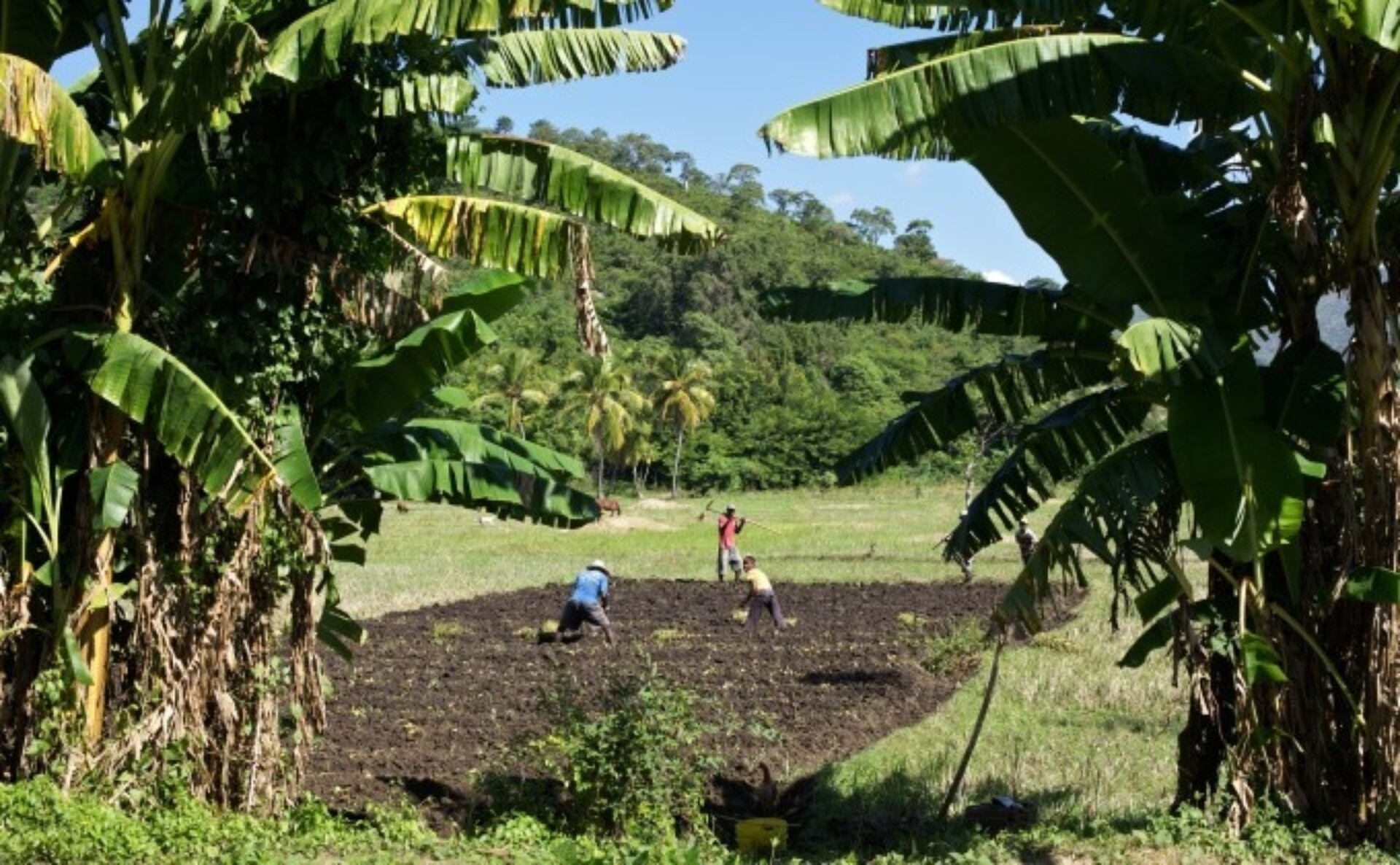
The purpose of the Project to Protect the Cap-Haïtien Drainage Basin is to contribute to improving the living conditions and quality of life for populations located in the Cap-Haïtien drainage basin. Over the years, this area has undergone severe degradation due to both human activity and natural disasters. These factors, along with the basin's location, have left the area extremely vulnerable, and the city and people of Cap-Haïtien are threatened by flooding.
By targeting the physical environment, certain economic conditions and organizational structures for those living riverside in the Cap-Haïtien drainage basin, the project aims to:
- Develop a community-driven approach for carrying out various project phases: assess participation, implement a Management Committee and sub-committees for smaller drainage basins, develop a land use plan and implement guidance and follow-up measures;
- Restore ravines by building boundaries, planting bamboo plantlets, and wattling;
- Protect river banks by constructing low rock walls and planting vegetation strips;
- Reforest the area by planting forest and fruit tree plantlets;
- Strengthen the capacity of local governments to legally protect the drainage basin.
The increased knowledge and involvement of on-site actors have enabled them to produce a participation assessment for the basin and a land use plan for the area. One hundred percent of the manual labour involved in protecting the five basins that comprise the largest drainage basin, Cap-Haïtien, has been completed. This means that 150,000 linear meters of planned vegetation strips were installed and 20,000 cubic meters of low rock walls were constructed, for a total surface area of 217.4 hectares.
The area was also reforested using two different methods: systematic reforestation and the establishment of woodlots. The project’s systematic reforestation has translated into the planting of 151,000 plantlets over 137 hectares. The woodlots established consist of some 15 small groves planted throughout the five sub-drainage basins, for a total surface area of 77.4 hectares and 85,140 plantlets, of which 65% are fruit trees. The manual labour involved created over 40,000 days of work for area residents.