Completed project
Nepal Emergency 2015: Response to the Earthquake
April 2015 to December 2015
$1,160,000 CAD
- 700,000 CAD from the Department of Foreign Affairs, Trade and Development Canada, International Humanitarian Assistance (DFATD-IHA)
- CAD 460,000 from CECI
Tuki Association Sunkosi (TUKI) in Sindhupalchowk District
- SAGUN in Kavrepalanchowk District
- Lalitpur District Milk Producers’ Cooperative Union (LDMPCU) in Lalitpur District
7,250 families (105,000 people)
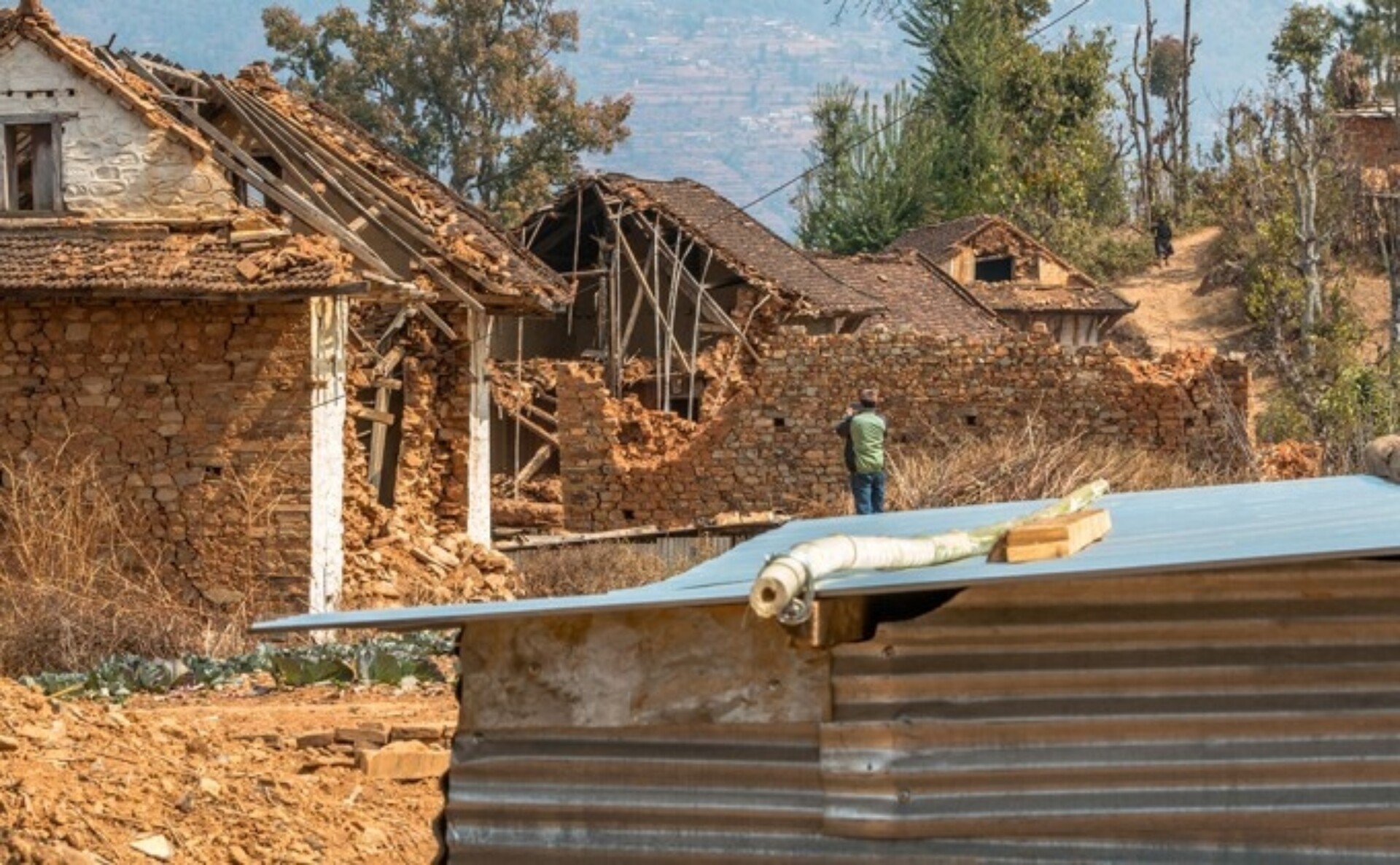
On April 25, 2015, an earthquake measuring 7.8 on the Richter scale struck Nepal, with its epicenter located 77 kilometers northwest of Kathmandu. Of the 75 districts that make up Nepal, 39 were affected by this disaster and subsequently experienced multiple violent aftershocks. In total, more than 5,000 people were killed, 10,000 were injured, and 10,000 were reported missing; 2.8 million Nepalese were displaced.
IMMEDIATE RESPONSE!
CECI’s response was immediate: in partnership with local NGOs, CECI provided relief to 4,000 vulnerable families living in the districts of Sindhupalchowk, Kavrepalanchowk, and Lalitpur—among the hardest-hit areas in the country. During the two months following the disaster, this emergency response initially focused on distributing temporary shelters, hygiene kits, and food and non-food items (kitchen sets, water filters, solar lanterns, etc.) in addition to providing psychosocial support to families. Subsequently, CECI’s intervention focused on supporting agriculture and dairy production—the pillars of this region—as well as rehabilitating drinking water systems and building toilets
EFFECTIVE AID
Thanks to funding from the Government of Canada and the outpouring of generosity from the Canadian public, CECI was able to distribute:
- 5,055 tarps to provide victims with temporary shelter;
- 2,875 food packages and 2,875 kitchen sets;
- 4,083 hygiene kits, 40 packages of essential medicines, and 1,134 water filters to improve sanitary conditions and access to safe drinking water;
- 20 psychosocial support sessions for people who have experienced severe trauma.
- 659 solar lanterns, helping to reduce risks during disasters of this magnitude.
In addition:
- 1,650 families received seeds and fertilizer for growing vegetables and grains;
- 156 dairy farmers received financial support to purchase buffaloes, equipment (milk cans and tools), and to repair their barns;
- Dairy cooperatives in the Lalitpur region received 30 new centrifuges, 20 digital scales, 50 aluminum cans, an analysis and cooling machine, 150 buckets, 30 electric forage cutters, and training sessions on management, production, and animal husbandry.
CECI’s intervention thus made it possible, within a few months, to address the most urgent needs and then to restore the livelihoods of 7,250 families—or 105,000 people.