Completed project
Cholera Epidemic Response
October 2010 to June 2011
$2,721,199 CAD
$ 1,793,436 provided by USAID $ 500,000 provided by CIDA $ 17,535 provided by UNICEF $ 23,000 provided by the OIF $ 49,000 provided by MRI $ 338,228 provided by CECI
More than 600 civil society organizations from Artibonite communes Haiti’s Ministère de la Santé Publique et de la Population (MSPP) Haiti’s Direction Nationale de l’Eau Potable et de l’Assainissement (DINEPA) Haiti’s Direction de la Protection Civile (DPC) United Nations Office for the Coordination of Humanitarian Affairs (OCHA)
Over 500,000 people
approximately 50% women
Haiti in a time of cholera: simple actions save lives
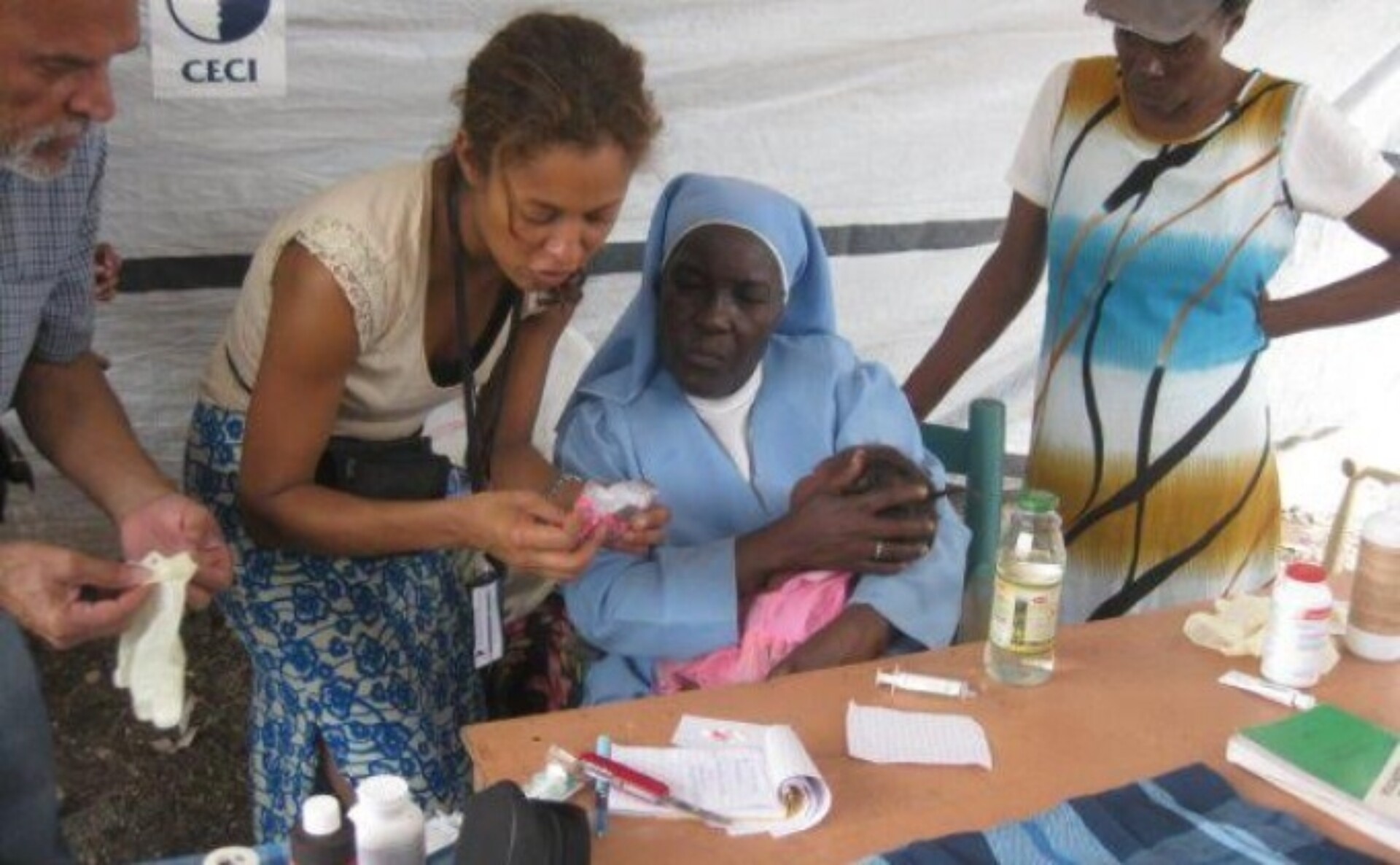
In emergency situations, adapting to change and rethinking our actions are essential to meeting the most urgent needs. In Fall 2010, still knee deep in post-earthquake reconstruction operations, Haiti was hit with a cholera epidemic. CECI was able to respond immediately, quickly redirecting its efforts toward containment of the disease.
Two projects emerged quickly to fight this acute diarrheal infection spread through ingestion of contaminated water and food: the U.S. Office of Foreign Disaster Assistance’s Water, Sanitation and Hygiene (WASH) and CIDA’s International Humanitarian Assistance program’s Cholera in Haiti project.
“At the start, we intended to reach 25,000 families. By intensifying the hygiene campaign, however, we managed to reach more than 50,000 families,” recounts Élise Saint-Denis, CECI community health counsellor in Haiti.
The initial phase of WASH used community-based outreach for effective epidemic response. CECI focused on mobilizing a network of approximately 600 grassroots community organizations. A critical mass of hygiene promoters received training and were deployed in their communities to raise household awareness. A pool of an additional 1600 hygiene promoters received training; over 25,000 bars of soap and 90,000 packets of oral rehydration salts were distributed – particularly in schools- and 1,700 training sessions were held. To ensure that the information was properly understood and put into practice, CECI chose to train school teachers, pastors, priests, and educators of all descriptions. They brought the message to public markets with songs about hygiene set to popular folk tunes. The campaign thus became part of daily life, advocated by known and respected local people to ensure these important health measures would take hold and persist into the future.
The cholera outbreak in Haiti demonstrated the alarming extent to which people lack access to potable water and adequate sanitation services. To prevent such water-borne epidemics in the future, the Cholera in Haiti project has invested in infrastructure that will help protect the population in the long term. The program has led to the construction of toilets and water points, and the installation of facilities for the chlorination of water sources.