News
Supporting Women’s Movements: Between Backlash and Resilience
March 5, 2026As International Women’s Day approaches on March 8, one reality stands out: progress in gender equality and sexual and reproductive rights rests on ecosystems that remain fragile.
Today, women’s organizations, feminist networks, and multilateral institutions face dual pressure: a rapid contraction of funding and a growing narrative offensive against gender equality and sexual and reproductive rights. For partners committed to inclusive societies, this is less a sectoral issue than a matter of democratic resilience.
Aggravated underfunding
Between 2021 and 2022, less than 1% of global humanitarian aid—around USD 142 million—was directly allocated to organizations defending women’s rights (UN Women, 2025).
Since 2023, several historic donors have announced significant cuts to their international aid envelopes, directly impacting:
-
Programs to combat gender-based violence
-
Sexual and reproductive health
-
Protection and psychosocial support services
-
Inclusive governance and women’s political participation initiatives
A March 2025 UN Women survey of 411 organizations indicates:
-
90% of women’s organizations are financially affected
-
47% risk closing within six months
-
72% have carried out layoffs
-
Over half have suspended some activities
In several contexts, contractual requirements now include restrictions on terms such as “gender equality” or “sexual health,” affecting not only budgets but also operational frameworks.
This underfunding, combined with some governments’ refocusing on security and economic priorities, weakens women’s organizations, which are nonetheless the first line of crisis response.
A well-coordinated anti-gender movement
According to The Next Wave report (European Parliamentary Forum for Sexual and Reproductive Rights, 2025), anti-gender networks mobilized USD 1.18 billion in Europe over five years—more than in the entire previous decade.
UNRISD analyses (2023) document significant transnational financial flows from conservative networks investing in:
-
Contesting sexual and reproductive rights
-
Questioning multilateral agencies (UNFPA, UN Women, WHO)
-
Spreading discourse linking “gender ideology” to social threat
We are no longer facing a temporary “rise,” but rather a normalization of anti-gender discourse across multiple institutional spheres.
The case of Haiti
When security crises erase reproductive justice
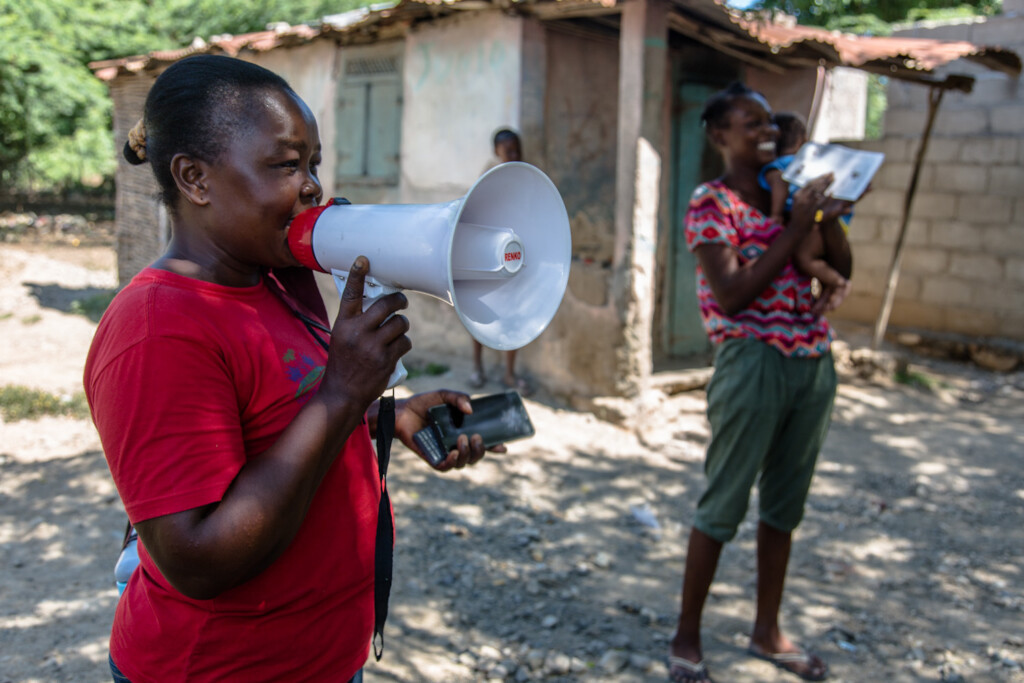
The experience of SOFA (Solidarité Fanm Ayisyèn), a women’s organization partner of CECI active for over 40 years in Haiti, concretely illustrates the interplay between funding cuts, the militarization of state priorities, institutional collapse, and the crisis of women’s rights.
In the first quarter of 2025, the Douvanjou Center received 206 survivors of sexual violence, compared with 12 in the same period in 2024 (SOFA, 2025). Between August and October 2025, 388 new cases were recorded, including 233 sexual assaults and 102 gang rapes (SOFA, 2025).
In none of the documented cases could post-rape care—required within 72 hours—be provided, as women were prevented from leaving their neighborhoods. Several forced pregnancies were recorded.
At the same time:
-
Health centers were attacked or burned
-
Access to contraception was interrupted
-
The judicial system was paralyzed
-
Mobile service points closed due to lack of resources
These data illustrate a transformation of violence: rape is used as a tool for territorial control and forced displacement. The consequences go beyond immediate violence, and services for women cannot meet demand.
Democratic erosion and systemic risks
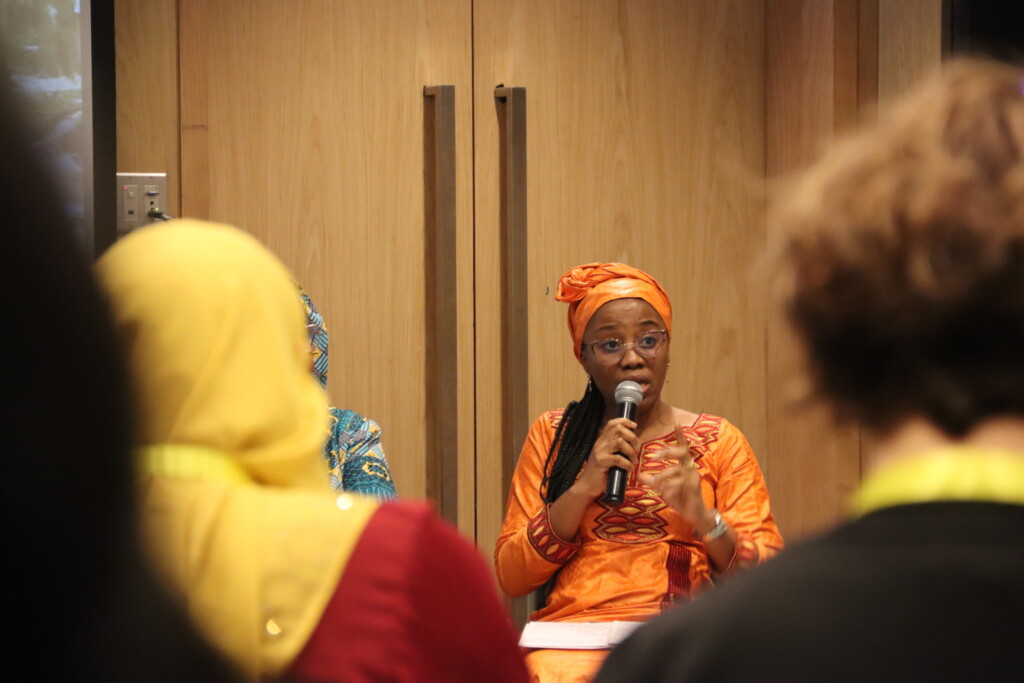
In the African Great Lakes region, the Concertation of Collectives of Women’s Associations (COCAFEM/GL), a coalition of over 1,800 women’s organizations in Burundi, DRC, and Rwanda and a CECI partner, highlights that funding cuts lead to:
-
Reduced community actions for women and girls
-
Pressure to depoliticize organizations to ensure institutional survival
-
Weakened data collection for citizen monitoring and accountability
As Nicole Nyangolo, Executive Secretary of COCAFEM, emphasizes: “If data collection stops, there is no evidence of abuse. Without evidence, there is no accountability.”
When local organizations can no longer document violations or produce alternative reports, the entire democratic accountability chain is weakened.
Strategic resilience and feminist innovation
Despite these constraints, women’s organizations develop adaptation strategies.
Discursive agility
Some organizations adapt their vocabulary to continue operating in hostile environments without abandoning their objectives. The goal is not to dilute principles but to ensure continuity of action.
Documentation and narrative change
Philanthropic leaders emphasize the importance of documenting impacts, demonstrating systemic transformations, and investing in evidence-based narratives. In a polarized context, evidence becomes a strategic lever.
Strategic alliances
Regional coalitions strengthen coordination between community organizations, academic institutions, and institutional actors to maintain political influence—sometimes less visible but more structured.
In the face of structural underfunding and the current discursive offensive, the issue is not only the survival of women’s organizations. It is about the type of society we choose to support. Investing in women’s movements today is investing in more just, stable, and resilient societies for the benefit of entire communities.