News
Women’s Leadership: Making International Solidarity an Economic Strategy
March 9, 2026Original article published in Le Devoir, March 7, 2026
The global economy is going through a period of significant turbulence. Geopolitical tensions are reshaping supply chains, budget priorities are tightening, and markets are becoming increasingly fragmented. In this context, one reality stands out: women are not on the margins of these transformations : they are key economic drivers.
Across the world, women are building businesses, sustaining value chains, innovating in constrained environments, and keeping productive ecosystems alive. Yet their role remains widely underestimated in dominant economic debates. Reflexes of economic retrenchment are gaining ground. Producing closer to home can strengthen certain capacities. However, the solidarity of an open economy does not depend solely on geographic proximity. It depends on the quality of the connections it builds: diversified, sustainable, inclusive, and responsible value chains. These chains do not stop at borders. In many cases, they become stronger when they cross oceans, multiply partnerships, and distribute risk.
In this uncertain climate, one conviction is gradually emerging: economic performance can no longer be separated from the development trajectories of the territories with which we do business. For Canada, an economy deeply integrated into international trade, this is a strategic issue. Turning inward may appear protective in the short term. Over the long term, however, resilience and competitiveness depend on our ability to diversify trade partners and build strong economic alliances capable of combining commerce with the strengthening of local ecosystems, both here and abroad. This means recognizing that development dynamics in the Global South are not external to Canadian commercial interests. When small and medium-sized enterprises grow stronger, when value chains become more equitable and inclusive, and when access to financing and markets expands, business relationships become more stable. Risks decrease. Innovation circulates more widely.
Across Africa, Latin America, and Asia, many women entrepreneurs are developing models grounded in cooperation, innovation, community anchoring, and more equitable value chains. In several African economies, the rise of structured entrepreneurship, the gradual integration of regional markets, and the emergence of new innovation hubs reveal strategic economic potential that remains underestimated in North American debates.
As Senator Amina Gerba reminds us, “For too long, we have viewed Africa as a land of charity. That perspective must change. While most of our partners are strategically investing in Africa, Canada continues to neglect this relationship.”
Data confirms this gap. Analyses from the Observatory of Economic Francophonie suggest that Canada has an unrealized annual trade potential with Africa of approximately USD 381.5 billion in exports and USD 137.0 billion in imports. Yet today, less than 1 percent of Canada’s trade takes place with the continent. This is a strategic signal that must also be addressed to diasporas, which represent a natural bridge between our economic spaces — a lever that remains underutilized to strengthen mutually beneficial exchanges.
Added to this is a major demographic asset: a young, dynamic, and rapidly growing population that represents one of the largest reserves of labour and talent in the world. Increasingly educated, connected, and innovation-driven, this generation is shaping new business models, accelerating digital transformation, and redefining local and regional value chains.
These dynamics are neither marginal nor peripheral. They constitute an important source of strategic learning and contribute to the reconfiguration of global economic balances. Innovation flows no longer move in only one direction.
Above all, these approaches respond directly to the challenges that concern businesses in Quebec today: supply chain resilience, social acceptability, and adaptation to climate and economic crises. The strongest economic alliances today are those built on diversified, inclusive, and interconnected entrepreneurial ecosystems.
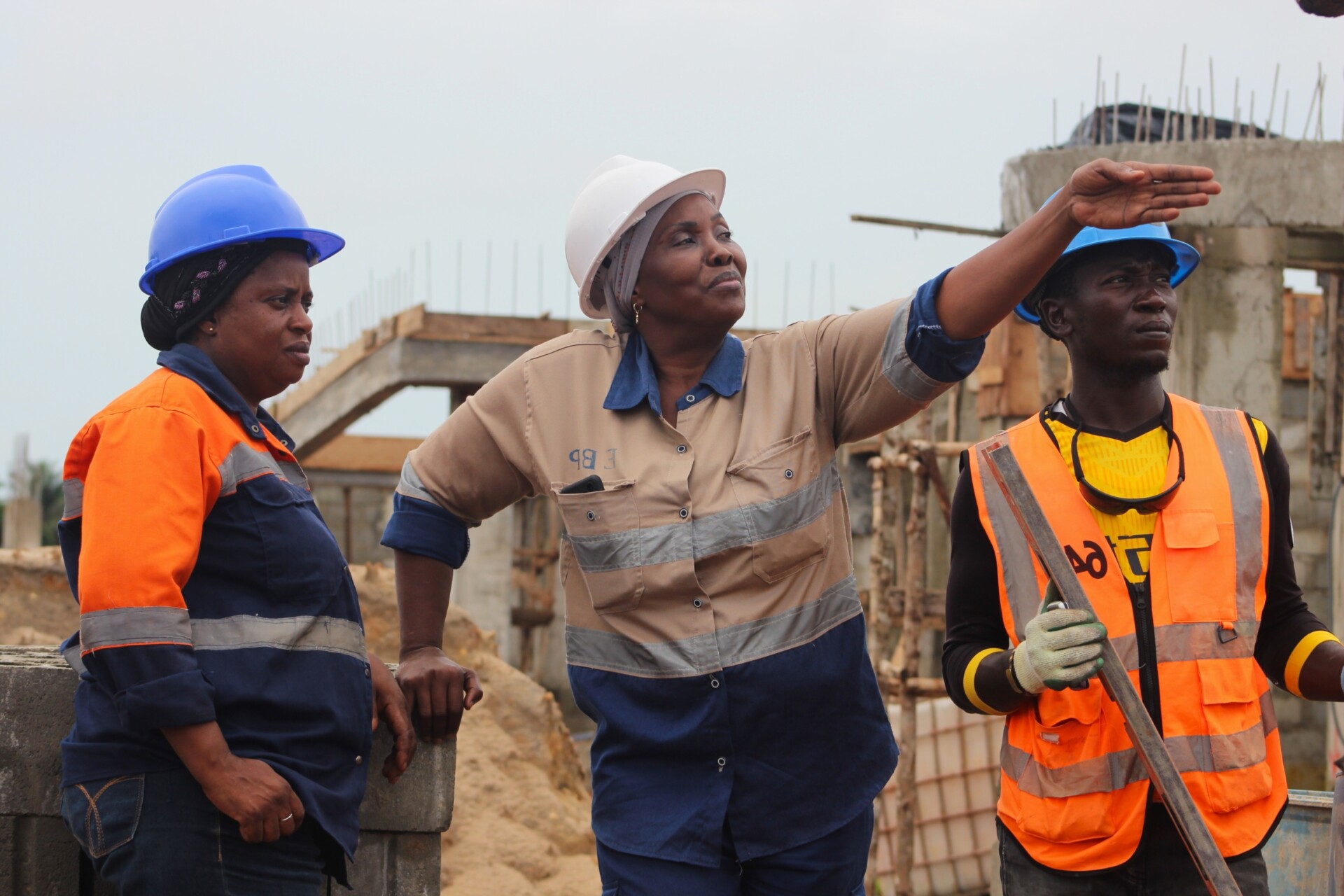
The Women entrepreneurs in solidarity initiative, led by CECI, is part of this approach. By fostering reciprocal mentorship between entrepreneurs from Canada, Africa, Latin America, and Asia, the program creates concrete business bridges. Each participant is both mentor and learner. This reciprocity transforms cooperation into an economic lever: opening new markets, diversifying partnerships, and sharing innovation.
These experiences reveal a truth that is often underestimated: international solidarity is not merely a moral stance, but an economic strategy. Diversifying partnerships, learning from models developed in constrained contexts, and integrating more inclusive and sustainable practices strengthens the innovation capacity of organizations and SMEs. In a world marked by geopolitical and economic instability, these alliances become a competitive advantage.
This reflection will continue during the panel with Senator Amina Gerba, “Women’s Leadership in 2026: Acceleration or Global Backlash?”, on March 18, 2026, as part of the 15th anniversary Gala of Gouvernance au féminin, in collaboration with CECI. The question will not simply be whether women’s leadership is progressing or retreating.
The more ambitious question will be this: will we recognize and fully support women’s leadership as a force capable of building strong economic alliances — locally and internationally — and of transforming current tensions into shared opportunities?
Partners
This article was written as part of CECI’s Volunteer Cooperation Program, implemented in partnership with the Government of Canada.
