News
In Haiti, forests are reborn and soils come back to life
March 26, 2026In the Sud and Grand'Anse departments of Haiti, farming communities are reforesting degraded lands to better cope with climate change. A look back at four years of action by the projet KLIMA Grand Sud.
Lands once thought lost
In the municipalities of Moron, Port-à-Piment and Chardonnières, soil degradation was a daily reality. After years of pressure on natural resources, climate-related deterioration, and the impacts of Hurricane Matthew in 2016 and the 2021 earthquake, thousands of families watched their land erode beneath their feet.
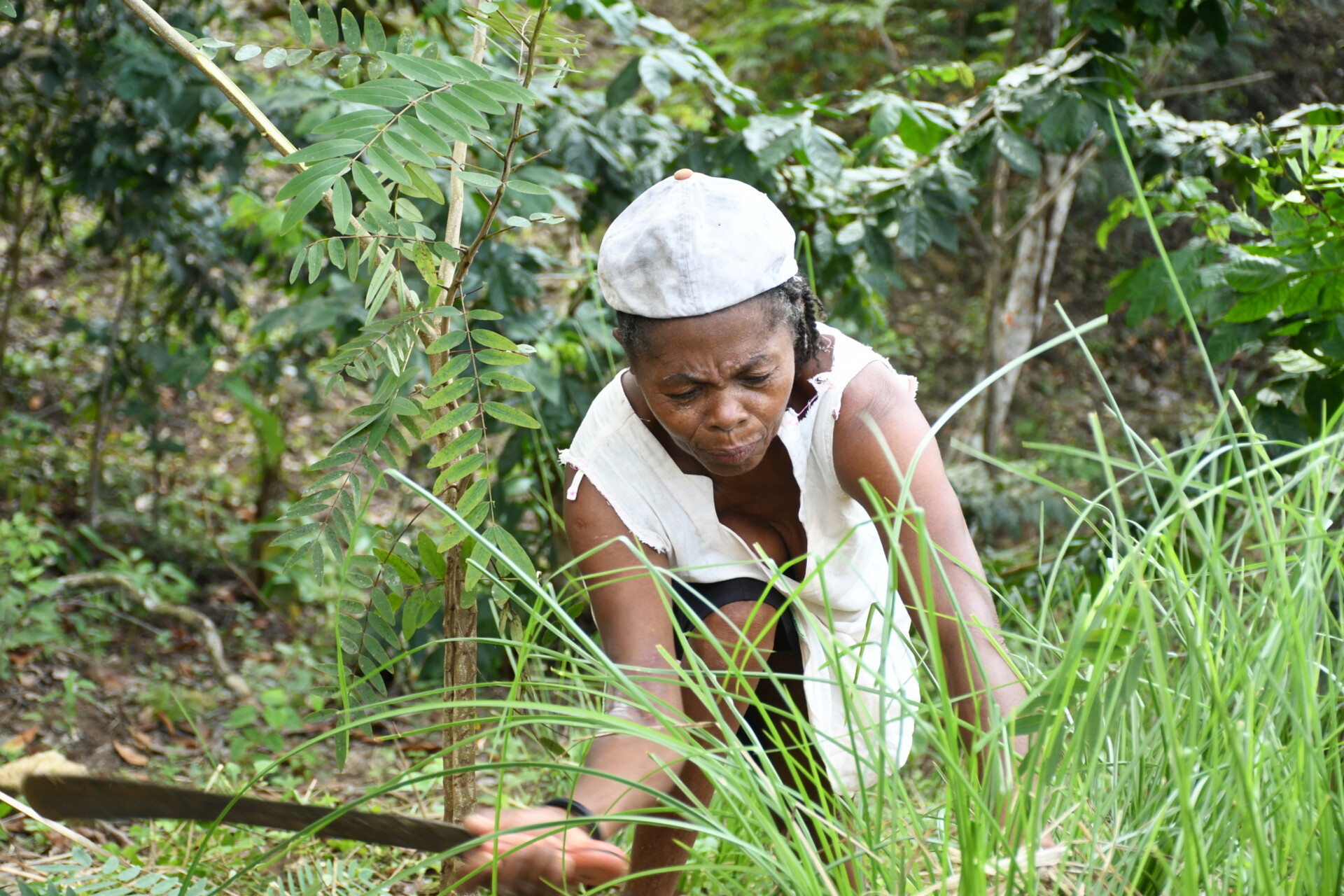
From January 2021 to September 2024, the projet KLIMA Grand Sud made a commitment to sustainable reforestation, combined with the creation of viable economic activities. In total, 386 hectares of sustainable energy forests were planted on severely degraded plots, mobilizing more than 3,600 people, including producers and local authorities.
Nature reclaims its rights
The results are visible: spontaneous grass regrowth, reduced erosion, return of wildlife. Approximately 1,500 farmers benefit directly from these forests. Among them is Jean Mertus, a farmer in Port-à-Piment who had nearly given up on his plot:
"I used to say la tè pa bay ankò (the land no longer gives) [...] After two years of project support, signs of soil recovery are encouraging. My plot is better protected against erosion, dead leaves fall and turn into compost, into organic matter. Through these interventions, hope has returned to my land."
The direct seeding reforestation technique, now mastered locally, along with the construction of 10 improved kilns (30% more efficient than traditional ones) have helped increase incomes while reducing pressure on natural forests.
In addition, eight mini composting sites were established and 635 people strengthened their skills in organic waste valorization.
Fewer emissions, greater resilience
Over the course of the project, the reduction in greenhouse gas emissions is estimated at 1,757.5 tonnes of CO₂ equivalent. Over 20 years, project interventions could sequester nearly 43,000 tonnes of GHGs, between the sustainable energy forests planted, carbon sinks, and emissions avoided through composting and eco-efficient wood processing.
Women at the heart of the transition
The project ensured that women were fully integrated into climate resilience dynamics. Forty women received training in ecological entrepreneurship, and five micro-enterprises specializing in organic waste valorization were supported, several of them led by women.
A model rooted in Haitian realities
In Kouwo, Fleuri watches the mountain he tends turn green again where nothing used to grow. His plot, once abandoned, has become a resource for the future:
"When I stand on the other side and look up at the mountaintop, I smile — I never would have believed it could one day bear trees."
For Innose, the changes have had an impact on her, but also on her entire family:
"Now that my land is reforested, [...] we can sell wood and use it to produce eco-efficient charcoal with my husband. [...] Thanks to the projet KLIMA, we are finally able to send our children to school."
The projet KLIMA Grand Sud demonstrates that it is possible to combine ecological restoration, emissions reduction, and local economic development. Implemented as a consortium by CECI and Viridis Terra International (VTI), with the support of local partners in Haiti, it was made possible through funding from the Government of Quebec.