News
Honey: The sweet gold of the Beninese women of Papatia
March 9, 2026Story of change
In our rich region of Kouandé, Benin, the landscape alternates between savannas and riverine forests, home to precious tree species. The abundant and flourishing biodiversity represents immense potential for local communities. It is within this privileged natural setting that our village, Papatia, thrives a little more each day—one of the few villages primarily inhabited by women, the guardians of the community's survival and economic balance.
Not so long ago, despite the wealth of our land, we women had to juggle domestic chores, artisanal gold mining, and sand collection to make ends meet... until the day nature offered us a golden path to autonomy: beekeeping. Initially practiced clandestinely and without official authorization, this activity quickly proved to be lucrative and incredibly rewarding.
A golden path
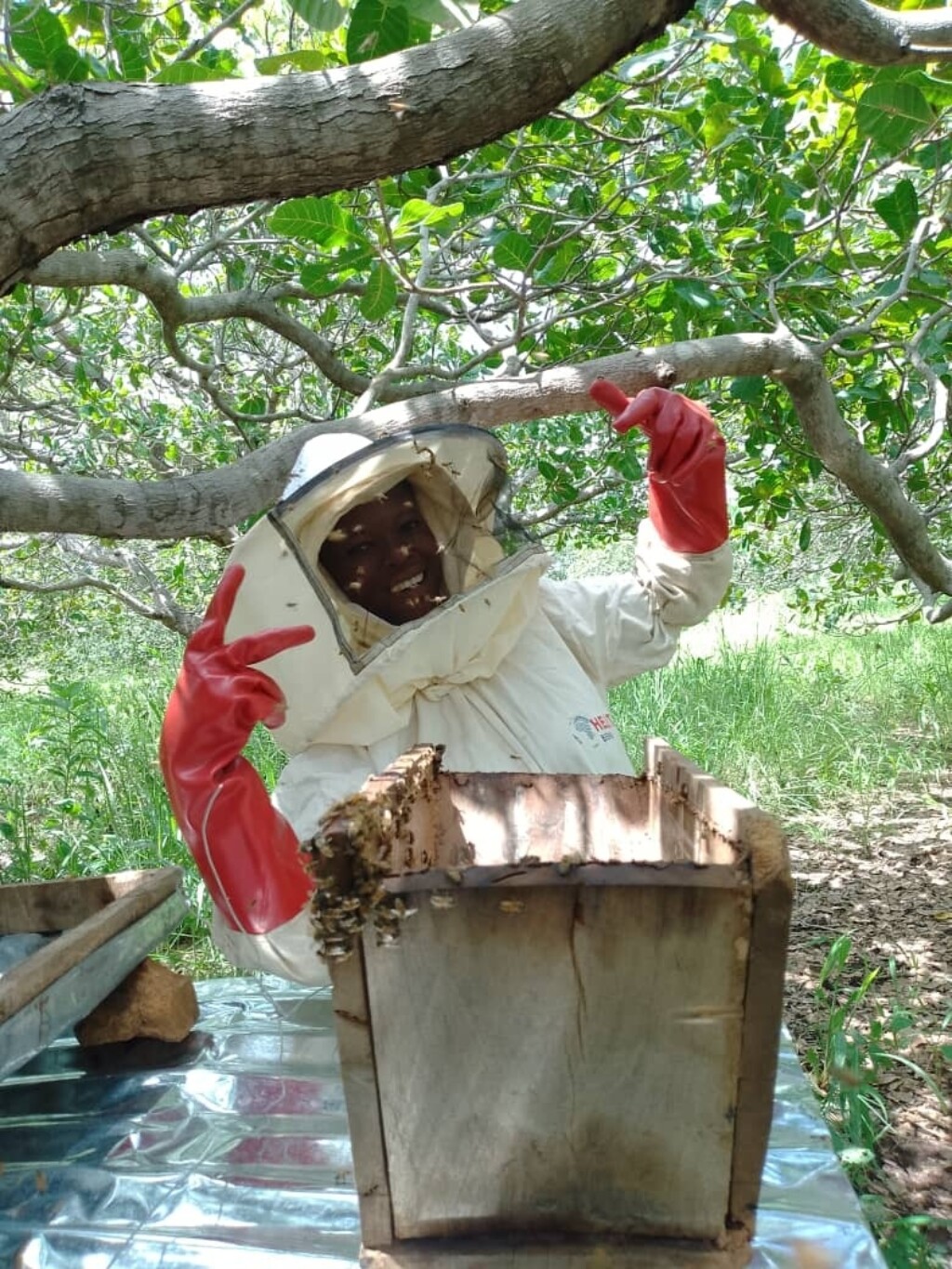
Like attentive nurses caring for newborns in a nursery, being a beekeeper requires precision, endurance, and diligence. Since most of us are mothers and wives, we must divide our vigilance between tending to the hives, caring for our children, and participating in agricultural work in our husbands' fields. The days quickly become grueling!
But our most formidable adversary remains climate change, which causes temperature fluctuations harmful to the productivity of our valiant little bees... Not to mention that the next generation is far from being secured. The insufficient number of hives prevents new recruits in the village from turning this into stable employment. Finally, we are sometimes uncertain of the true value of the derivatives we produce—such as wax and propolis—and the best harvesting and processing techniques to adopt to remain profitable. Our activities would benefit from more structure and a long-term vision to make our trade sustainable, as they are currently conducted primarily for subsistence.
A strengthened activity
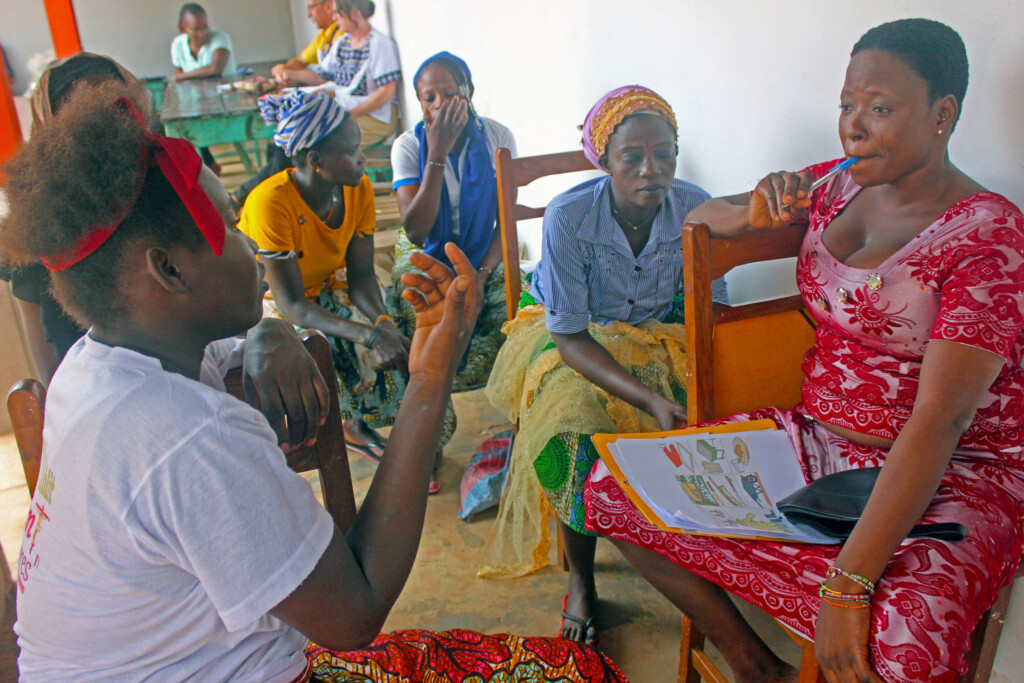
Several months ago, the non-governmental organization Réseau de Développement des Réserves naturelles Communautaires (REDERC) and PCV-CECI in Benin invested in helping us become active participants in restoring our ecosystem. Fulani women, a marginalized ethnic group, were the first to unite and form a collective: WEETI. Bariba women followed suit by forming the YAAKI BUURA association. These two organizations, supported by REDERC, committed themselves to protecting biodiversity, economic well-being, and environmental preservation in the commune. Their actions triggered a multiplier effect, leading to the creation of two additional groups.
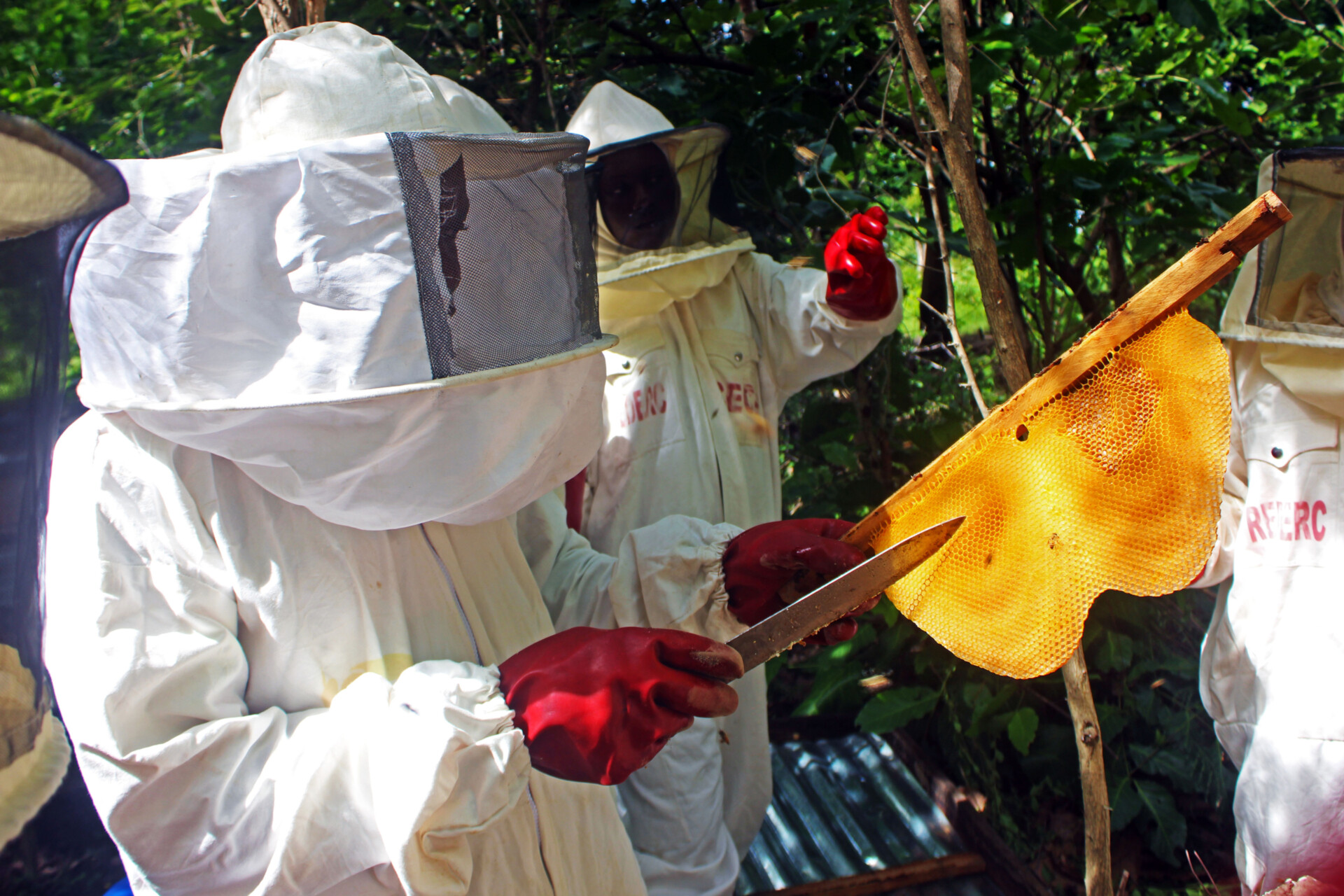
Thanks to in-depth training in honey production techniques, beekeeping is no longer seen as a side job—it is now our central and most lucrative activity! Collective beekeeping fosters solidarity and mutual aid among the workers, allowing us to collaborate effectively to optimize the hive installation and colonization process.
It is thanks to this collective spirit that the hive of Mrs. Kora, a healer and beekeeper, was saved in August 2024. When transhumant cattle knocked over and damaged her bee colonies, several of us beekeepers from the neighborhood mobilized to restore them, responding in unison to Mrs. Kora's call for help. From this episode, the Community Apiary Management Committee was born, aiming to protect the entire beekeeping area from damage caused by roaming animals.
Bit by bit, the transformation is accelerating, and both environmental and economic awareness are becoming more refined. We are moving away from bushfires—which were previously used to trap small animals during hunts and clear vegetation for crop production—in favor of installing hives that better preserve biodiversity and provide a sustainable economy. Furthermore, the opportunities offered by honey have revived hope for a better tomorrow and confidence in our own abilities. I recall the proud words of my neighbor, Soule Baké, 45, a beekeeper and mother of seven, which I find very fitting:
Every morning, I see Soule approach her hives with a tenderness mixed with respect for this gift from nature. Where others see only insects, she sees partners—fragile yet powerful allies. Like all of us, her pride comes not only from the sweet gold she harvests, but from the invisible bond she weaves day after day with our little workers.
This activity is part of CECI's Volunteer Cooperation Program funded by the Government of Canada.
