News
Gender-based violence and sexual and reproductive rights: intersecting struggles for action
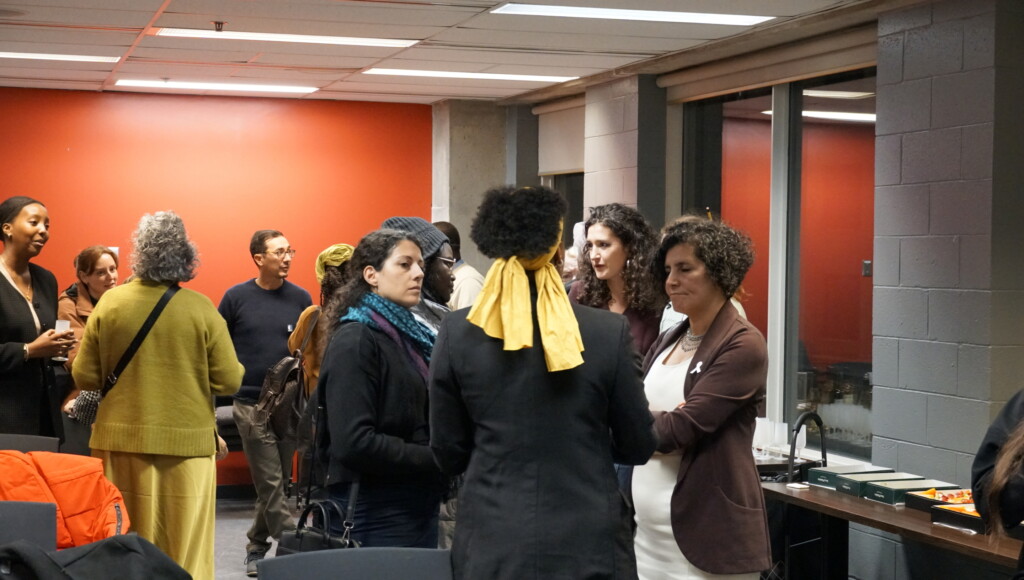
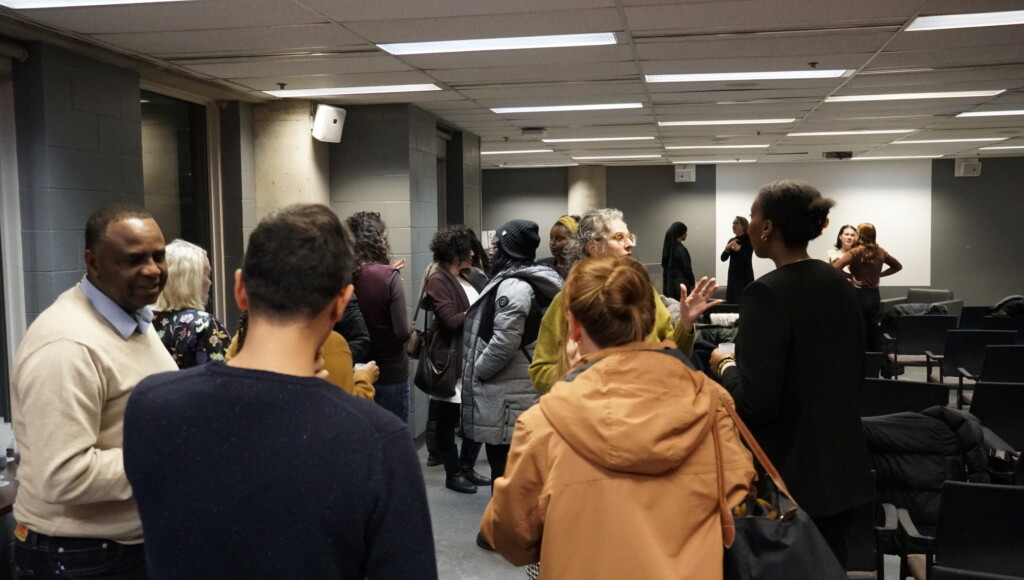
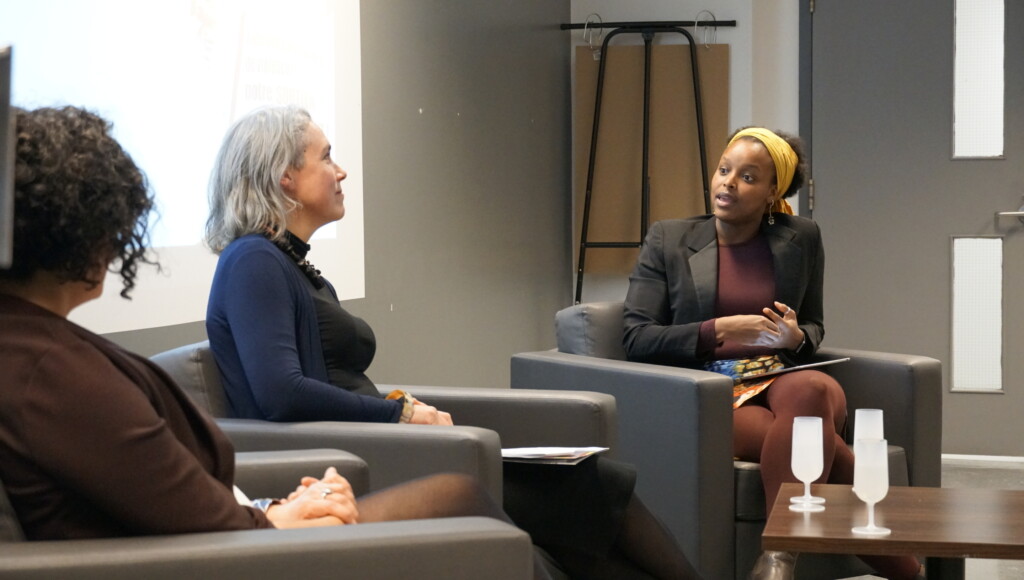
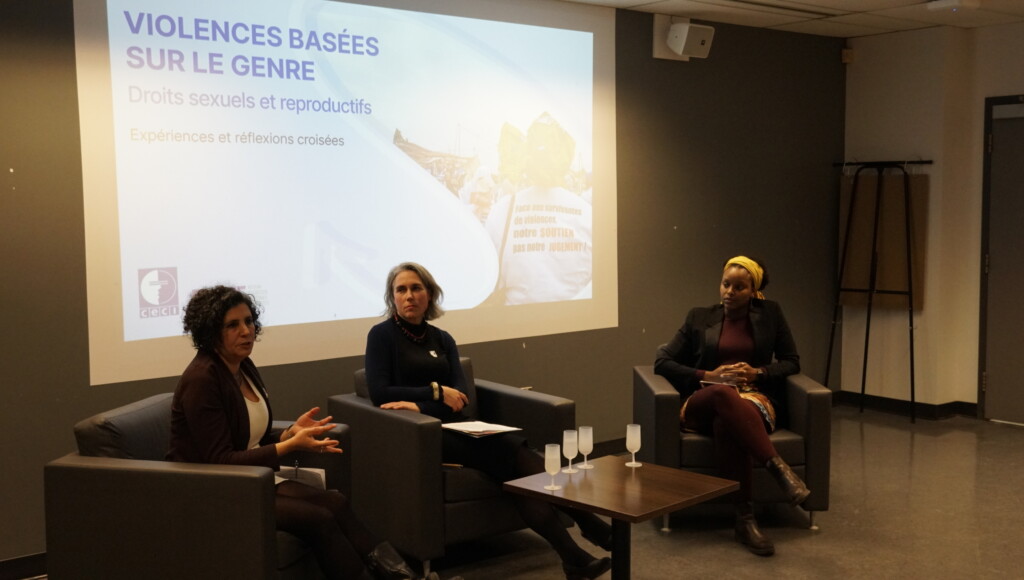
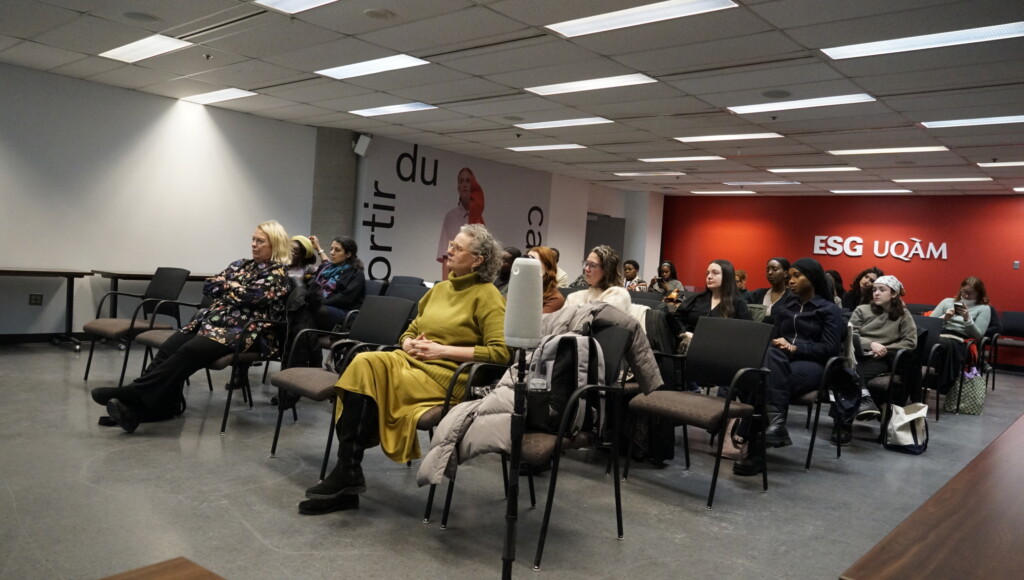
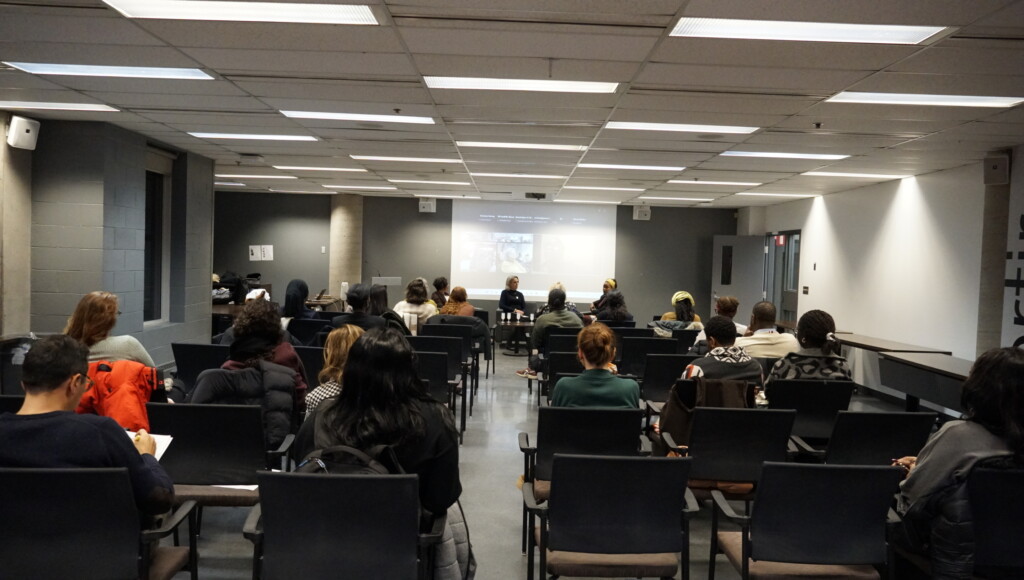
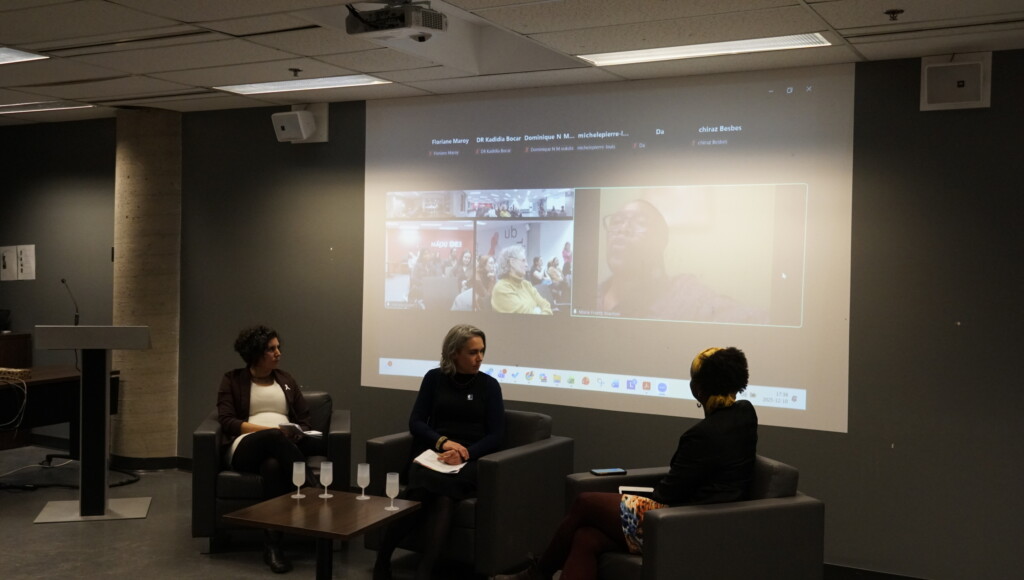
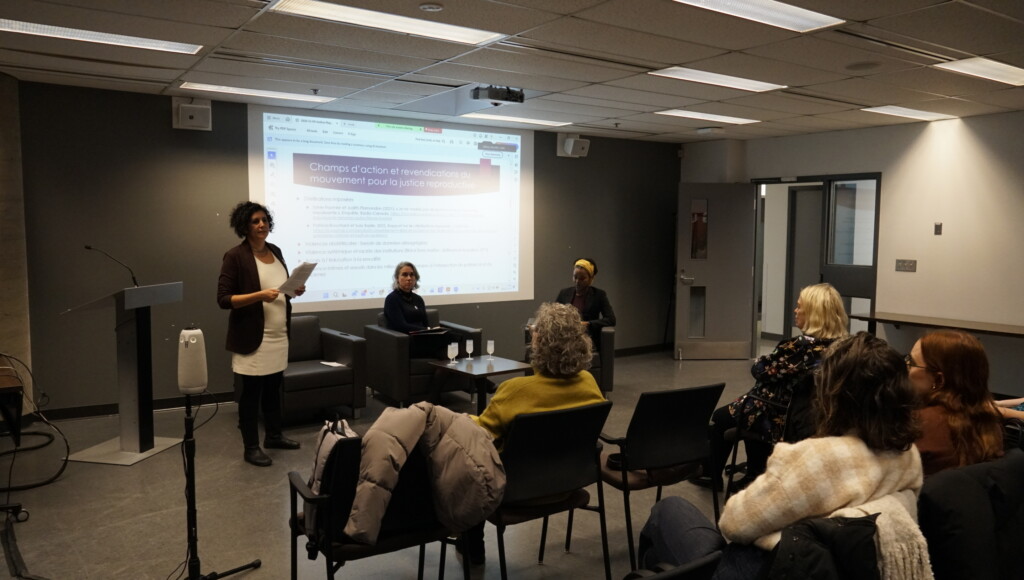
December 17, 2025CECI, in collaboration with the Réseau québécois en études féministes (RéQEF), organized the panel “Gender-Based Violence and Sexual and Reproductive Rights: Crossed Experiences and Reflections” on December 10, 2025, at UQAM, marking the closing of the international 16 Days of Activism against Gender-Based Violence campaign.
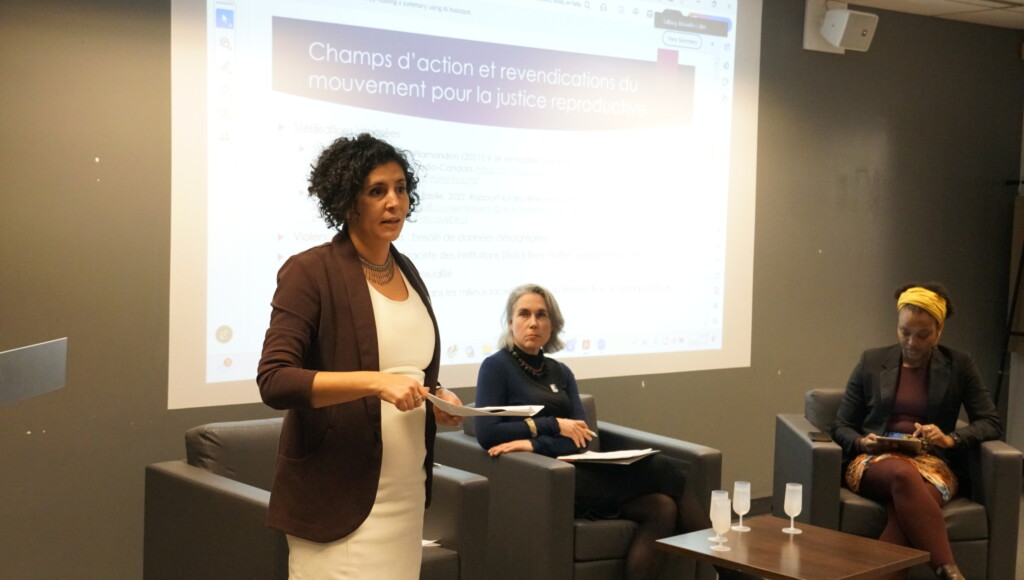
Moderated by Marina Mathieu, the event brought together strong feminist voices from academia, international cooperation and women’s movements.
Nesrine Boussaih, Professor in the Department of Sexology at UQAM and member of the RéQEF, addressed reproductive justice through an analysis of intersecting forms of oppression experienced by women in accessing health services. She emphasized the urgent need to:
“Recognize systemic racism and how it affects the daily lives of racialized and Indigenous people, including their sexual and reproductive lives,”
while also proposing concrete ways to translate these principles into institutional practices.
Marie Frantz Joachim, Executive Director of Solidarité Fanm Ayisyèn (SOFA) in Haiti, shared a powerful testimony on the struggle against gender-based violence and for sexual and reproductive health and rights in a fragile security context. She offered a clear-eyed assessment:
“What we are witnessing today is a systemic enterprise of control: control over bodies, control over mobility, and even control over the possibility of living without fear.”
She highlighted the importance of understanding gender-based violence and sexual and reproductive rights as a unified field of action, and underscored the strength of women’s organizations which, despite ongoing violence, continue to act with dignity, strategy and determination:
“Keeping reproductive justice at the center of agendas requires moving beyond the limits of humanitarian action and fully embracing the political positioning of feminist approaches. Only then can the root causes of gender-based violence be addressed.”
Julie Théroux-Séguin, Lead Thematic Advisor – Women’s and Girls’ Rights at CECI, offered an analysis bridging traditional knowledge and digital technologies, often perceived as opposing forces. Drawing on experiences in Guatemala and Mali, she showed how these approaches are in fact complementary in supporting adolescent girls facing gender-based violence and taboos surrounding sexual and reproductive health. She noted that many adolescents experience cycles of silence and isolation, and that:
“Breaking adolescents’ isolation—physical, social and psychological—can involve the creation of feminist third spaces, whether community-based and grounded in the traditional knowledge of midwives, or virtual and more anonymous through mobile applications. These spaces help foster agency by linking endogenous knowledge, emerging technologies and evolving social dynamics.”
In closing, the discussions highlighted concrete experiences and strategies of resistance drawn from initiatives in Haiti, Mali, Guatemala, Canada and beyond. The panel underscored a key message: the fight against gender-based violence and the defense of sexual and reproductive health and rights are inseparable, deeply political, and cannot be advanced without the knowledge, voices and leadership of women themselves.