News
Women Deliver 2026: solutions to today's challenges
May 4, 2026CECI was at Women Deliver! This international conference—the largest of its kind focused on women’s and girls’ rights and gender equality—took place in Melbourne, Australia, from April 27 to 30, 2026.
A landmark conference
It brought together more than 6,100 people from 189 countries, including women’s and youth organizations, feminist movements, researchers, donors, and policymakers, to discuss key issues related to gender equality, women’s health and bodily autonomy, rights, and social justice. The conference also led to the co-creation of the Melbourne Declaration for Gender Equality, which calls for rebalancing the ecosystem in favor of accountability and rights: “a world where states fulfill their obligations, where feminist movements have the necessary resources and space, and where all actors align to support these efforts.” Already signed by 10 countries, including Canada, this declaration marks a strong commitment.
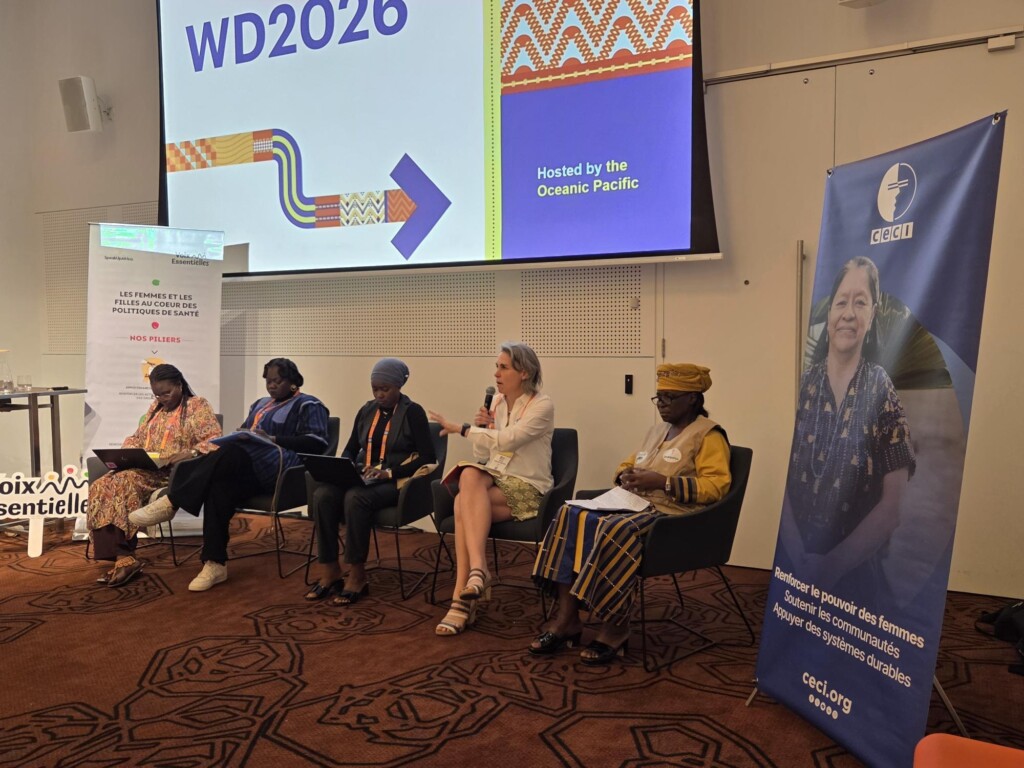
CECI moderated two panels at the heart of its priorities.
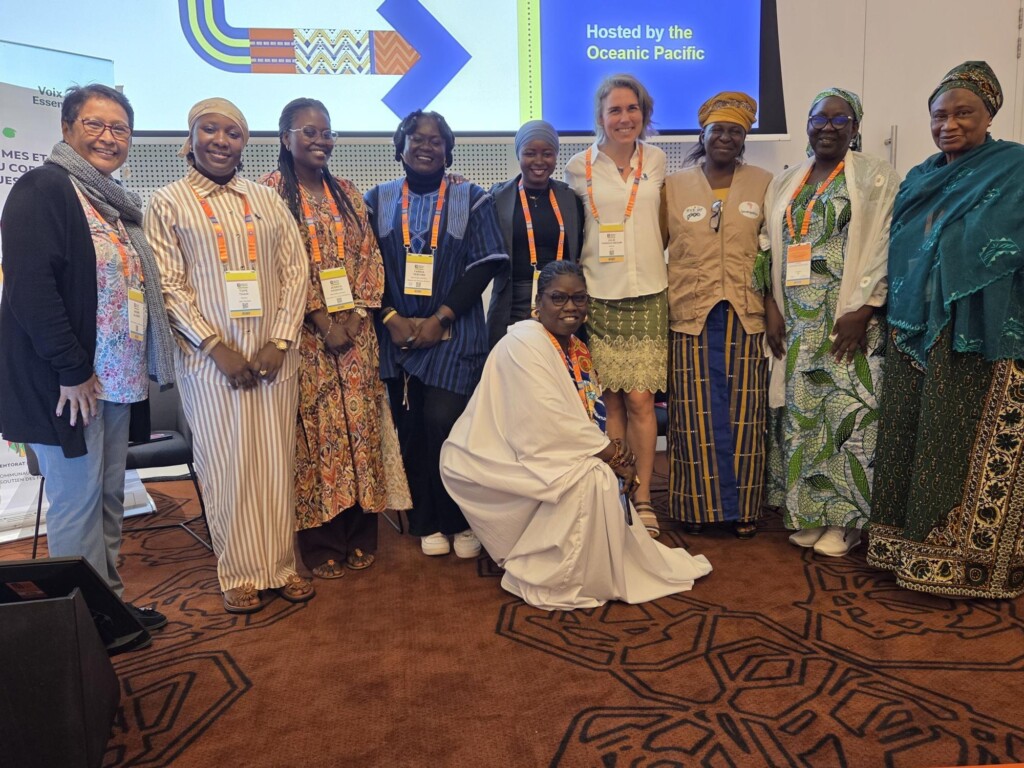
The first, moderated by Faizatou Sylla (Réseau des Héroines du Faso), highlighted innovative approaches at the intersection of climate justice, bodily autonomy, and collective action. Jessica Hessouh (Association des Juristes Sénégalaises), Sonia Farida Tiemtoré (Réseau des Héroines du Faso), Julie Théroux-Séguin (CECI), and Pauline Nana (Association for the Support of Vulnerable Children and Women, Burkina Faso) demonstrated how women’s organizations are developing responses rooted in local realities by combining indigenous knowledge, evidence-based advocacy, legal support, and digital tools.
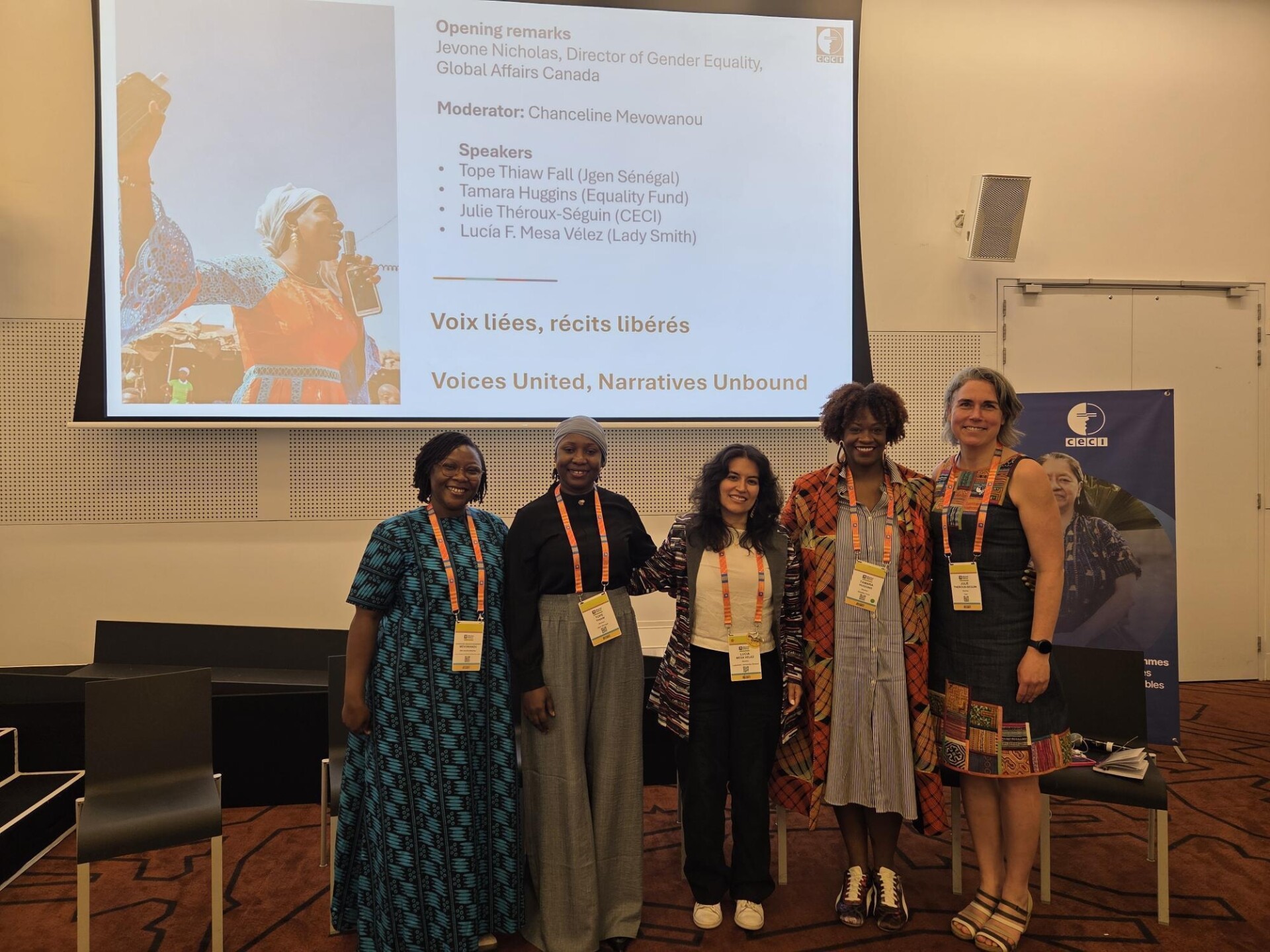
The second panel, moderated by Chanceline Mevowanou (Jeunes filles actrices de développement, Benin), brought together Tope Thiaw Fall (JGEN Senegal), Tamara Huggins (Equality Fund), Lucía Mesa Vélez (Lady Smith), and Julie Théroux-Séguin (CECI). The discussions explored feminist strategies in the face of rising anti-rights rhetoric, drawing on political contexts, the development of feminist AI, and on-the-ground experiences to continue advancing rights in constrained environments.
A few strong voices stood out in these discussions:
Some actors hijack our messages and co-opt our language to discredit us and promote their anti-rights discourse. It’s up to us to be creative, to push back, and to keep our priorities front and center. -Tope Thiaw Fall, JGEN Senegal
The impact of climate change is still too often addressed without linking it to sexual and reproductive health and rights. Yet it is a key factor in the rise of gender-based violence and health challenges for girls and women, particularly in the Sahel. During crises, girls and women lose access to care and information, even as they are already organizing and taking action, particularly through digital means. - Sonia Farida Tiemtoré, Réseau des Héroines du Faso
In addition to funding cuts, we also see misleading rhetoric, sometimes even from our allies. But we continue to uphold a clear vision that guides our ambition: that of strong women’s movements that make their voices heard where it makes a difference. - Julie Théroux-Séguin, CECI
We are not here merely to resist anti-gender narratives—we are here to lead the way. - Tamara Huggins, Equality Fund
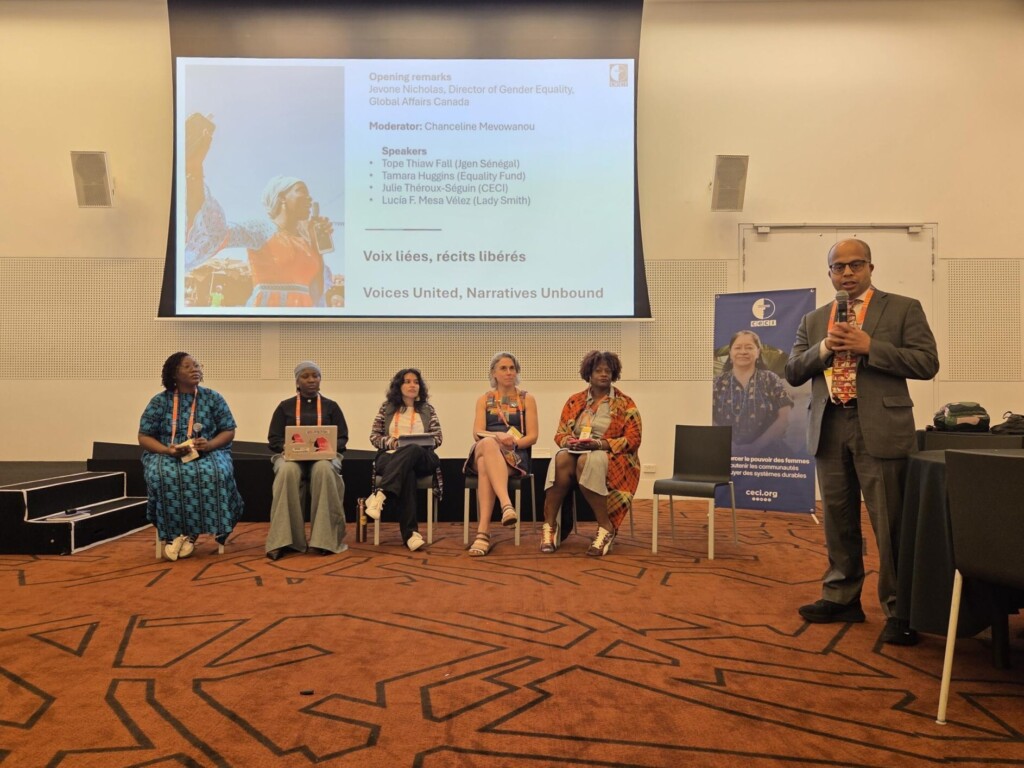
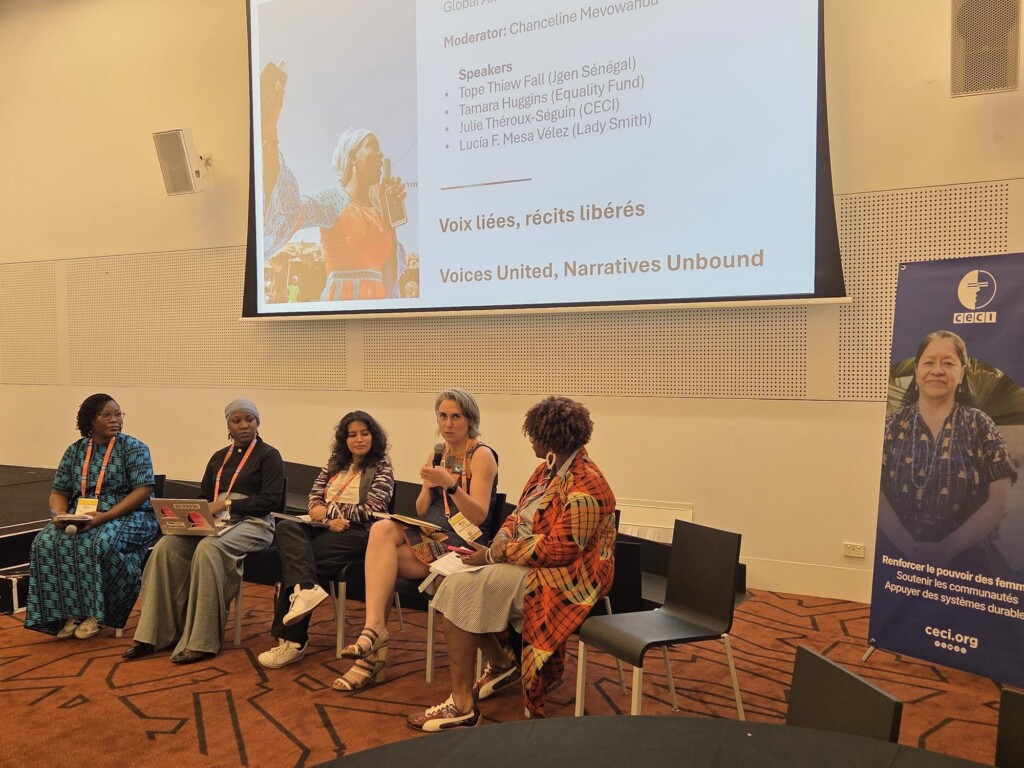
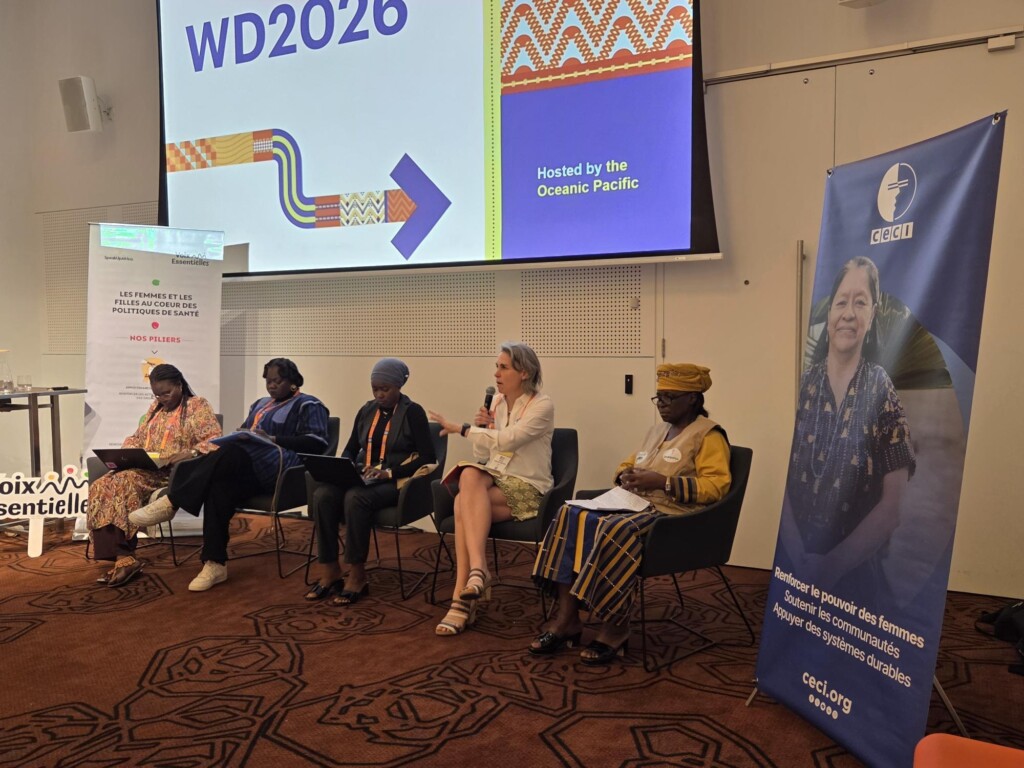
These panels were made possible thanks to the financial support of the Marcelle and Jean Coutu Foundation.